Dhow Sailing on the Shatt al-Arab – A Maritime Adventure
Not Just a River — A Living Archive
To sail the Shatt al-Arab on a traditional dhow is to glide through the very bloodstream of Mesopotamian civilisation — where the Tigris and Euphrates, after 2,000 km of separate journeys, finally embrace and flow as one toward the Persian Gulf.
This 200-km waterway — forming the border between southern Iraq and Iran — is more than a river. It is a palimpsest of empire, trade, and resilience:
- Where Sumerian reed boats once carried grain to Ur
- Where Ottoman baghlahs sailed spice from Basra to Muscat
- Where British gunboats enforced mandates — and Iraqi fishermen resisted
- Where, today, date-laden dhows glide past oil terminals and restored madbās (date presses), embodying a quiet defiance of time.
A dhow journey here is not “tourism.” It is participatory history — a chance to hoist lateen sails with Basrawi captains, share qahwa with marsh-dwelling Maʻdān, and witness a maritime culture that refused to drown — even when the river itself nearly did.
For the mindful traveller, this is Iraq’s most poetic, profound, and deeply human adventure.
🔗 Before embarking: Prepare with our Complete Guide to Visiting Iraq — covering visas, safety, and cultural respect.
Part I: The Shatt al-Arab — A River of Many Names, One Soul
Known as Arvand Rūd in Persian and Shatt al-Arab (“Coast of the Arabs”) in Arabic, this tidal estuary is born at Al-Qurnah — the mythical site of the Garden of Eden — where the Tigris and Euphrates merge.
- Length: 200 km from Al-Qurnah to the Gulf
- Tidal Range: Up to 2.5m — allowing seawater to surge inland twice daily
- Ecological Crisis: Water flow reduced by 70% since 1990 due to Turkish/Iranian dams — yet life persists
- Cultural Crossroads:
- Arab (Basrawi), Persian, Marsh Arab (Maʻdān), and Afro-Iraqi communities coexist
- Languages: Arabic, Persian, Maʻdāni Arabic, and Kumzari (endangered Afro-Arabic dialect)
Captain Hassan al-Basri, 63, dhow master:
“They call it a border. We call it a sabil — a path. The river doesn’t ask for passports. It only asks: Are you ready to flow?”
🔗 Deepen your understanding: The Influence of Mesopotamia on Modern Iraq
Part II: The Dhow — Iraq’s Floating Heritage
The dhow is not a relic — it is a living vessel, still built by hand in Basra’s Suq al-Safafir (Coppersmiths’ Market).
- Design:
- Hull: Teak or sidr (Christ’s thorn) wood — curved for shallow waters
- Sail: Lateen (triangular) — catches even faint breezes
- Steering: Tikka (long wooden rudder) — operated by foot and hand
- Types:
- Battil: Long, sleek — for open water (20–30m)
- Sambuk: Sturdy — for river trade (15–20m)
- Shasha: Small, flat-bottomed — for marshes and canals
- Builders: Families like the Al-Zubaidi in Basra — 7 generations of shipwrights
Ustad Karim, master builder:
“We don’t use nails. We use nūr — rope lashings soaked in date syrup. Stronger than steel — and when it rots, the boat returns to the earth, like a body to dust.”
🔗 Experience craftsmanship: How to Experience Iraq’s Art and Craft Scene
Part III: The Journey — A 3-Day Sailing Itinerary
Day 1: Basra to Al-Qurnah — Where Rivers Unite
60 km upstream
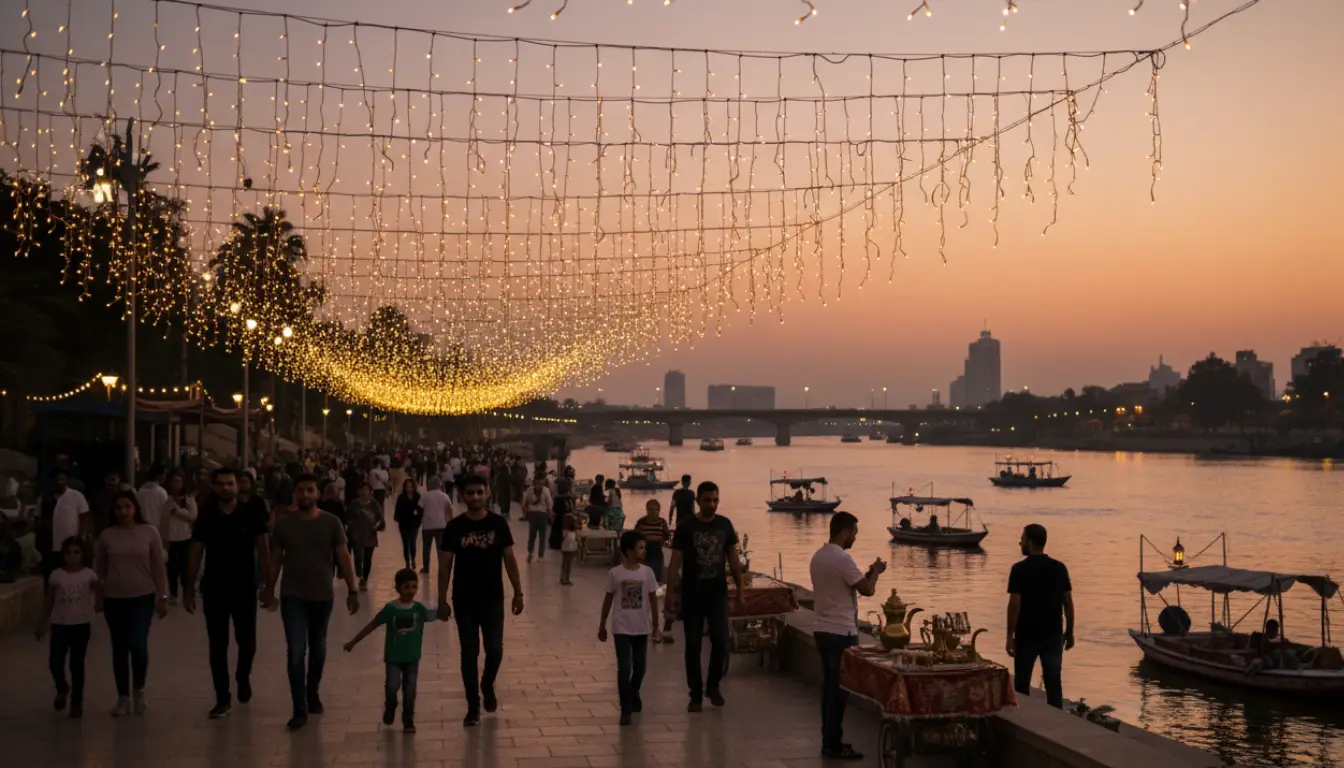
- Departure: From Basra Corniche, past the Ottoman-era Customs House
- Highlights:
- Date Palm Archipelago: Sail through 10,000+ palms — Iraq’s “green gold”
- Al-Faw Peninsula Wetlands: Spot sacred ibis, marbled duck, and Maʻdān mudhif (reed houses)
- Al-Qurnah Confluence: Stand at the sacred spot where Tigris + Euphrates = Shatt al-Arab
- Stay: Maʻdān Homestay — sleep in a guest mudhif, eat masgouf (grilled carp) by firelight
🔗 Explore Basra deeper: Basra — A Port City Full of History and Culture
Day 2: Al-Qurnah to Qal’at Saleh — Through Eden’s Echoes
50 km downstream
- Highlights:
- Garden of Eden Site: Visit the Ezra’s Tomb shrine (Jewish, Muslim, Christian veneration)
- Ancient Bitumen Seeps: Where Sumerians caulked boats 5,000 years ago
- Date Pressing Season (Aug–Oct): Help families harvest barhi dates; taste dibs (date molasses)
- Cultural Stop: Afro-Iraqi Community of Al-Zubayr — hear liwa drumming and zār healing songs
🔗 Cultural immersion: Exploring Iraq’s Unique Cuisine
Day 3: Qal’at Saleh to Abu Flus — To the Edge of the Gulf
40 km downstream
- Highlights:
- Oil Terminals of Khor al-Amaya: Stark contrast — dhows glide past supertankers
- Mangrove Forests (Regenerating): Planted by local youth to fight erosion
- Sunset at Abu Flus: Anchor where the Shatt meets the Gulf — toast with arak as fishing dhows return
- Return: Transfer to Basra by shasha (small dhow) or car
🔗 Pair with: The Majestic Marshlands of Southern Iraq
Part IV: Meet the Keepers of the River
Captain Leila Hassan — Iraq’s First Female Dhow Captain
34, Basra — founder of “Women of the Shatt” collective
“They said a woman can’t read the river. But my grandmother navigated by stars and bird flight. I just added GPS. Tradition isn’t static — it evolves, like the tide.”
- Leads all-female sailing trips
- Trains girls in navigation, knot-tying, and oral history
🔗 Support women-led tourism: How to Respect Local Customs in Iraq
Sheikh Thamir al-Maʻdāni — Guardian of the Marshes
70, Chibaish — oral historian and reed-boat builder
“When Saddam drained the marshes, he didn’t just kill water — he killed memory. We rebuilt the mudhif. Now we rebuild the stories — one dhow trip at a time.”
- Shares maqām al-maʻdān (marsh songs) at sunset
- Teaches sustainable reed harvesting
🔗 Ecological context: Exploring Iraq’s National Parks and Natural Wonders
Part V: Practical Guide — Sailing Safely & Ethically
When to Go
- Best: October–April
- Mild temps (18–28°C)
- Calm winds, clear skies
- Date harvest season (Aug–Oct)
- Avoid: June–August — 50°C+ heat, sharqi winds (dust storms)
🔗 Seasonal planning: Best Time to Visit Iraq
What to Bring
| Essential | Recommended |
|---|---|
| • Light, long-sleeve cotton (sun/wind protection) <br> • Wide-brimmed hat <br> • Reef-safe sunscreen <br> • Reusable water bottle | • Waterproof notebook (for sketches/journal) <br> • GoPro (helmet mount for sailing shots) <br> • Small gift: high-quality dates, Arabic coffee beans |
Booking & Costs
| Tour | Duration | Price (USD) | Includes |
|---|---|---|---|
| Half-Day Corniche Cruise | 4 hrs | $35 | Dhow ride, coffee, guide |
| Full-Day Date Palm Journey | 8 hrs | $85 | Lunch, date pressing demo, mudhif visit |
| 3-Day Shatt Expedition | 3 days | $240 | All meals, homestays, permits, safety gear |
- Operators: Shatt Heritage Sailing, Maʻdān Eco-Tours, Basra Maritime Collective
- Booking Tip: Reserve 7–10 days ahead; confirm via WhatsApp (signal strong in Basra)
🔗 Tech tip: Top 5 Travel Apps for Iraq
Safety & Permits
- No military zones — routes avoid sensitive terminals
- Life jackets mandatory — modern, fitted
- Permits: Included in tour cost (KRG + Basra Governorate)
- Insurance: All operators carry liability coverage
🔗 Critical safety overview: Is Iraq Safe for Tourists? A Detailed Overview
Part VI: Ethical Sailing — Leave Only Ripples
- Respect Sacred Sites:
- Remove shoes at shrines (Ezra’s Tomb, Sufi mazars)
- Ask before photographing people — especially women
- Protect the Ecosystem:
- No plastic onboard — all waste packed out
- No anchoring in seagrass/mangrove zones
- Support Local Economies:
- Buy dates, dibs, and crafts directly from families
- Tip crew in cash (not via apps)
Captain Leila:
“A good sailor leaves no trace — except gratitude.”
🔗 Ethical framework: Essential Travel Tips for First-Time Visitors
Part VII: Beyond the Sail — Extend the Voyage
Where to Stay in Basra
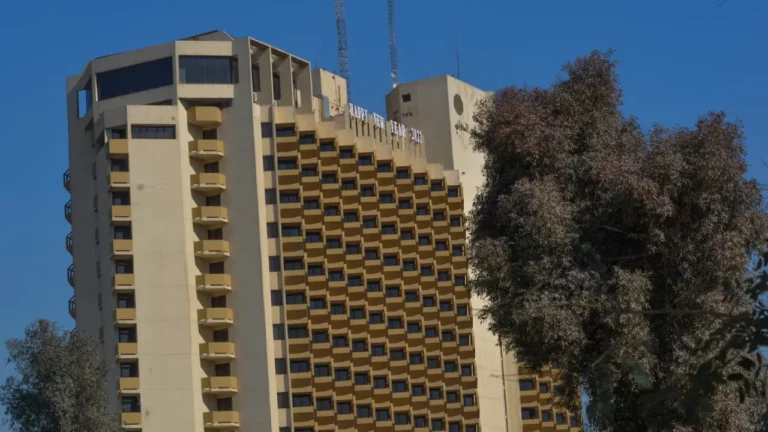
- Luxury: Basra International Hotel — river views, rooftop çayxane
- Boutique: Dar al-Nahr Guesthouse — restored 1930s merchant house, family-run
- Eco: Maʻdān Mudhif Stay — authentic reed-house experience
🔗 Accommodation guide: Best Hotels in Basra & Southern Iraq
Must-Try River Cuisine
- Breakfast: Samoon with jibna (local cheese) + daqqūs (olive paste)
- Lunch: Masgouf — carp grilled over date-palm embers (UNESCO Intangible Heritage)
- Dessert: Kleicha mawsiliyya — date cookies stamped with Assyrian motifs
🔗 Culinary journey: Exploring Iraq’s Unique Cuisine
Combine with Nearby Wonders
- Ur Ziggurat — 45-min drive; birthplace of Abraham
- Shatt al-Arab Boat Museum — restored dhows, navigation tools
- Basra Museum — Islamic maritime history, pearl-diving exhibits
🔗 Full itinerary: 10 Historical Sites You Can’t Miss in Iraq
Voices from the Water
Yusuf, 17, apprentice sailor (Basra):
“My phone has GPS. But my captain teaches me to read the river — the colour of the water, the flight of herons, the smell before rain. That knowledge doesn’t need batteries.”
Dr. Layla Abbas, marine biologist (University of Basra):
“The Shatt’s revival is Iraq’s revival. When the date palms drink, when the fish return, when the dhows sail — hope is not metaphor. It is measurable.”
Sheikh Thamir:
“They ask: ‘Why sail an old boat in a modern world?’ I say: Some truths only move at the speed of wind.”
Conclusion: The River Flows — And So Do We
A dhow journey on the Shatt al-Arab is not about reaching a destination.
It is about surrendering to flow — to the pull of tide, the whisper of reeds, the generosity of strangers who call you ibn al-nahr (“son of the river”).
In a world of haste and hubris, the dhow offers an ancient wisdom:
True progress isn’t speed. It’s alignment — with nature, with history, with each other.
So when the lateen sail fills and the tikka creaks under Captain Leila’s hand, remember:
You are not just sailing a river.
You are joining a 6,000-year-old conversation — between land and water, past and future, human and divine.
And the next verse?
It’s yours to write.
Plan Your Shatt al-Arab Voyage
- 🛂 Visa & Entry: How to Obtain a Tourist Visa for Iraq
- ✈️ From the UK: Complete Guide to Travelling from the UK
- 📅 When to Go: Best Time to Visit Iraq
- 🧭 Full Trip Planning: How to Plan a Safe & Enjoyable Trip
- 💷 Budgeting: Budget Travel in Iraq
- 📱 Tech Prep: Top 5 Travel Apps for Iraq
- 🎒 Tours & Transport: How to Travel Between Cities in Iraq
🔗 Ready for more? Explore: Travel2Iraq — Your Ultimate Guide to an Amazing Adventure
“The river does not hurry — yet it reaches the sea.”
— Adapted from a maʻdān proverb, whispered on the Shatt’s evening breeze
If you’re ready to explore Iraq, get in touch with us today. We offer complete travel packages, including flights, accommodation, and guided tours tailored to your needs. Simply fill out the form below or contact us on WhatsApp at +441992276061 for quick assistance. Let us make your journey to Iraq smooth and unforgettable!