Iraq’s Feminist Trailblazers – Meet the Women Shaping Modern Culture
To speak of “feminism” in Iraq is not to import a Western ideal. It is to recognize a centuries-old continuum — of queens, poets, scholars, and rebels — who carved space for women’s voices in a land where empires rose and fell, but women persisted.
From Queen Shubad of Ur (c. 2600 BCE), buried with a golden headdress and a retinue of 68 attendants — a ruler in her own right — to Princess Badi’a bint al-Hussein, who in 1932 became Iraq’s first female MP candidate, Iraqi women have always claimed authority, even when history tried to silence them.
Today, amid complex social currents — tribal traditions, religious conservatism, post-war trauma, and global connectivity — a new generation of feminist trailblazers is not waiting for permission. They are building platforms, rewriting narratives, and redefining power — not in opposition to Iraqi identity, but as its most vital expression.
This is not a story of victimhood. It is a story of agency — of women who code in Baghdad cafés, paint murals in Basra alleyways, litigate in Erbil courts, and recite poetry in Mosul’s rebuilt ruins — all while navigating family expectations, security concerns, and the weight of representation.
They do not seek to “Westernise” Iraq. They seek to Iraqify feminism — rooted in sumud (steadfastness), karama (dignity), and ‘adl (justice).
Let us meet them — not as symbols, but as individuals: brilliant, flawed, determined, and utterly transformative.
Part I: The Poets — Words as Weapons and Wings
Dunya Mikhail: The Poet of Witness
Baghdad-born, now in Detroit — but her heart in Al-Kadhimiya
- Legacy: One of Iraq’s most celebrated contemporary poets — a survivor of Saddam’s regime, exile, and the 2003 war.
- Feminist Act: Refuses the label “war poet.” Instead, she writes of ordinary resilience — a mother braiding her daughter’s hair during shelling; women sharing bread in a bomb shelter.
- Key Work: The War Works Hard (2005) — darkly ironic, deeply human:“The war works day and night,
in the office and in the field,
in the palace and the prison,
in the factory and the mosque…”
— but the poem ends: “…forgive me, war, for not congratulating you more.” - Modern Impact: Runs “Poetry for Peace” workshops via Zoom for girls in displaced persons camps — teaching them to write their truth, not trauma porn.
- Her Creed:“Feminism in Iraq isn’t about burning bras. It’s about lighting candles in dark rooms — and daring to read by their light.”
Sara al-Jabouri: The Voice of Gen-Z Mosul
24, University of Mosul — English Literature & Digital Activism
- Platform: Instagram @Sara.Speaks.Mosul (87K followers)
- Feminist Act: Posts bilingual poetry (Arabic/English) on street harassment, mental health, and Yazidi sisterhood — often filmed in front of rebuilt landmarks.
- Viral Moment: Her poem “My Body is Not a Battlefield” — recited in a mujaffa gown at Al-Nuri Mosque’s reopening — viewed 2M+ times.
- Innovation: Co-founded “Verse & Veil” — a safe-space salon where young women write, debate, and support each other without male moderators.
- Reality Check:“My father still asks, ‘When will you marry?’ I say: ‘When my poems stop rhyming with freedom.’ He sighs — but he shares my posts.”
Part II: The Artists — Reclaiming Space, One Mural at a Time
Hind Karim: The Muralist of Basra
31, founder of “Women on Walls” collective
- Background: Trained in Baghdad’s Institute of Fine Arts — fled to Basra after 2019 protests.
- Feminist Act: Paints larger-than-life portraits of Iraqi women on neglected public walls — not saints or victims, but scientists, athletes, welders, grandmothers.
- Landmark Work: “The Teacher” — a 10m-tall mural of Dr. Amal al-Mallakhi, Basra’s first female physics professor, chalk in hand, equations swirling around her.
- Method: Works with local girls — ages 12–18 — as apprentices. “They mix paint. I mix metaphors.”
- Pushback & Power:
- Vandals painted over “The Midwife” three times.
- Each time, 50 women returned — repainted it together, holding hands. Now it’s protected by community watch.
- Her Vision:“A mural can’t be deleted. It can’t be shadow-banned. It stands — in sun, in rain, in defiance — and says: We are here. We are visible. We are part of the city.”
Layla Al-Attar (1944–2003): The Ghost Who Still Guides
Baghdad — martyr and muse
Though assassinated in a 1993 U.S. missile strike (targeting intelligence HQ, her art studio was collateral), Layla Al-Attar — Iraq’s first female Director of the National Art Centre — remains a feminist beacon.
- Her Rebellion: Painted nude figures in 1980s Baghdad — not for shock, but to reclaim the female body as sacred, not shameful.
- Legacy Project: The Layla Al-Attar Digital Archive (2024), curated by her niece, digitises 200+ banned works — accessible to Iraqi art students for the first time.
- Quote on Every Studio Wall:“If they bomb my brushes, I will paint with my fingers.
If they cut my hands, I will paint with my blood.
If they silence me — my silence will be a canvas.”
Part III: The Technologists — Coding a New Future
Zahraa Al-Husseini: The Architect of Safe Space Online
29, Baghdad — Founder of Nisaa Tech (“Women Tech”)
- The Gap: In Iraq, only 17% of tech jobs are held by women — and online harassment deters many from digital careers.
- Her Solution:
- CodeSalaam: Free coding bootcamps for women (Python, web dev) — held in secure community centres, with childcare provided.
- SalaamShield: A browser extension she built that blurs hate speech in Arabic social media comments — used by 12K+ Iraqi women.
- Breakthrough: Partnered with Asiacell to offer free data for Nisaa Tech students — removing financial barrier.
- Why It’s Feminist:“Tech isn’t neutral. If men design the apps, men design the world. We’re building tools that protect — not profile — women.”
- Result: 212 graduates in 2024; 68 launched startups — including Dukkana (“Her Shop”), an e-commerce platform for rural women’s crafts.
Dr. Rana Dajani: The Scientist Who Plants Trees — and Ideas
Jordan-based, but Iraqi-born — molecular biologist & social innovator
- Iraqi Roots: Grew up in Baghdad; fled after 1990 Gulf War. Never forgot her home.
- Feminist Act: Founded “We Love Reading” — now in 60 countries — but with a distinctly Iraqi adaptation:
- Trains women in IDP camps to become “Reading Ambassadors”
- Uses local folktales (not Western imports) — e.g., stories of Queen Zabibi of the Arabs, or Rabia al-Adawiyya, the Sufi mystic
- Science + Spirit: Her research on stem cells and trauma proves that reading aloud reduces cortisol in displaced children — turning storytelling into evidence-based healing.
- Her Message to Iraqi Girls:“You don’t have to choose between umm (mother) and ‘ālima (scientist). You can be both — and more. The Qur’an says: ‘Are those who know equal to those who do not know?’ (39:9). Seek knowledge — it is your right.”
Part IV: The Lawyers & Legislators — Rewriting the Rules
Judge Suaad al-Khuzai: The Gavel That Breaks Chains
55, Erbil — Iraq’s first female judge to preside over a Family Reconciliation Court
- The System: Iraq’s Personal Status Law (1959) is progressive on paper — but in practice, tribal sulh (reconciliation) often forces women to drop abuse cases.
- Her Innovation:
- Created mandatory counselling before sulh agreements — ensuring women understand their legal rights
- Introduced child advocates in custody cases — so a daughter’s voice isn’t drowned out
- Landmark Ruling (2023): Ordered a man to pay 10 years of back alimony in one lump sum — setting precedent for financial justice.
- Her Quiet Power:“I don’t speak at protests. I speak in paragraphs — in rulings that become law. Change isn’t always loud. Sometimes, it’s the sound of a gavel — final, firm, fair.”
Dr. Vian Dakhil: The Yazidi Voice in Parliament
48, Member of Iraqi Parliament (2014–2021), survivor of ISIS captivity
- The Trauma: In 2014, she broke down on the parliamentary floor, pleading for help for Yazidis under ISIS: “If you will not help us, just give us weapons to defend ourselves!” — a moment that galvanised global action.
- Feminist Legacy:
- Spearheaded the Yazidi Survivors Law (2021) — granting reparations, healthcare, and official recognition of the genocide
- Founded “Free Yezidi Foundation” — rehabilitating survivors through trauma-informed therapy and vocational training
- Her Uncompromising Truth:“They tried to erase us — our faith, our women, our memory. But a woman who remembers is a woman who resists. And we — Yazidi, Sunni, Shi’a, Christian — are all Iraqis who remember.”
Part V: The Entrepreneurs — Economy as Empowerment
Ahlam al-Maliki: The Seamstress of Sovereignty
38, founder of Bayt al-Khiyata (“House of the Seamstress”), Baghdad
- The Problem: 70% of female garment workers in Iraq are paid under the table, with no contracts or protections.
- Her Model:
- Co-op structure: 42 women own shares; profits reinvested in training
- Ethical fashion: Revives mujaffa and sharwāl with modern cuts — sold globally via Etsy, with artisan bios and fair pricing
- “Stitch & Speak”: Weekly circles where women discuss domestic violence, legal rights, and dreams — over sewing machines
- Impact: Each garment funds one hour of legal aid for a fellow artisan via partnership with Iraqi Women’s Network.
- Her Philosophy:“A needle is small — but it pierces fabric, patriarchy, and poverty. One stitch at a time.”
Dr. Fatima al-Zahraa: The Pharmacist of the Marshes
41, founder of Nabat (“Herb”), mobile health clinic for Southern Marsh Arab women
- The Gap: In Iraq’s remote Ahwar (marshes), maternal mortality is 3x the national average; many births are unattended.
- Her Solution:
- Solar-powered boat-clinic, staffed by all-female team
- Trains daya (traditional midwives) in modern hygiene and emergency response
- Grows medicinal herbs (chamomile, shiba) to make affordable postpartum teas
- Feminist Insight:“I didn’t come to replace tradition. I came to protect it — so a mother lives to hold her child.”
- Result: 40% drop in home-birth complications in her zone (2022–2024).
Part VI: The Unseen Architects — Community Builders
Umm Hassan: The Grandmother of Al-Dora
68, Baghdad — unofficial “peace elder” in a mixed Sunni-Shi’a neighbourhood
- Her Power: No degree, no title — but when sectarian tensions rise, families come to her courtyard for chai and mediation.
- Method: Uses proverbs and food — e.g., serves masgouf (grilled fish) to Sunni families, quzi (lamb rice) to Shi’a — saying: “Hunger softens hearts faster than speeches.”
- Feminist Act: Created “Mothers’ Pact” — 200 women who pledge: “If your son raises a weapon against my son, I will stand between them — and shame you both.”
- Why It Matters: In a state where institutions fail, women’s informal networks keep society intact.
The “Library Ladies” of Mosul
12 women, ages 22–65 — volunteers at Al-Ma’mun Bookstore
After ISIS banned books, they hid 3,000 volumes in basements, ovens, and chicken coops. Today, they run:
- “Story Time in the Rubble” — reading to children in damaged schools
- “Grandmothers’ Archive” — recording oral histories of pre-2014 Mosul
- “Book Bikes” — pedal carts delivering books to displaced families
“They burned our libraries,” says Najwa, 52. “But they didn’t know: a woman who reads raises a child who questions. And a questioning child builds a better Iraq.”
Part VII: Challenges — The Reality Behind the Resilience
These women are not superheroes. They are strategists — navigating real constraints:
- Security: Many use pseudonyms online; workshops held in undisclosed locations
- Family Pressure: Marriage and motherhood expectations remain intense — “When will you settle down?” is a daily refrain
- Funding Gaps: 89% of Iraqi women-led NGOs rely on foreign grants — volatile and short-term
- Intra-Community Tensions: Feminism is not monolithic — secular, Islamist, tribal, and urban/rural women often disagree on tactics
Yet — they persist. Not because it’s easy, but because silence is no longer an option.
Part VIII: How to Support — Beyond Applause
| Action | Impact |
|---|---|
| Buy from Iraqi women-led brands (e.g., Bayt al-Khiyata, Dukkana) | Direct income, market validation |
| Amplify their voices — share their platforms (not just Western media about them) | Builds digital sovereignty |
| Fund unrestricted grants (e.g., via Iraqi Women’s Network) | Lets them set their own priorities |
| Visit ethically — join women-led tours (e.g., Nisaa al-Mawsil) | Tourism dollars stay local |
| Learn their history — read Iraqi Women: Untold Stories (Zahra Ali, ed.) | Counters erasure |
Remember: Solidarity isn’t about “saving.” It’s about stepping back — so Iraqi women can lead, define, and thrive on their own terms.
Conclusion: The Future is Female — and Iraqi
Iraq’s feminist trailblazers are not waiting for a revolution.
They are living it — in verse, in code, in courtrooms, in clinics, in the quiet courage of a grandmother’s courtyard.
They do not seek to erase tradition — but to expand it, to include the voices once whispered, now rising.
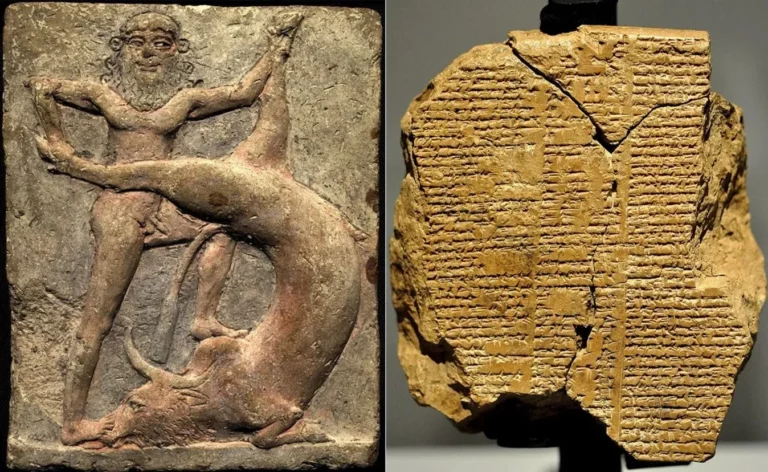
Their feminism is not imported. It is indigenous — born of Tigris mud, Babylonian clay, and the unbroken line of women who knew:
To shape culture, you must first shape the world you want to live in.
And in Iraq — scarred, complex, magnificent — that world is being built, stitch by stroke, word by word, law by law.
By women who refuse to be footnotes.
By women who are writing the next chapter.
In their own hand.
Further Resources
- Books: Iraqi Women: Untold Stories (Zahra Ali); The Poetry of Dunya Mikhail (Carcanet Press)
- Documentaries: Her Voice, Her Power (Al Jazeera, 2024); Code Sisters (BBC Arabic)
- Organisations to Support:
- Iraqi Women’s Network (iwniq.org) — policy advocacy
- Nisaa Tech — tech education
- Free Yezidi Foundation — survivor support
- Podcasts: Nisaa FM (Iraqi feminist radio, online); Baghdad Diaries (Spotify)
If you’re ready to explore Iraq, get in touch with us today. We offer complete travel packages, including flights, accommodation, and guided tours tailored to your needs. Simply fill out the form below or contact us on WhatsApp at +441992276061 for quick assistance. Let us make your journey to Iraq smooth and unforgettable!