
Iraq’s Hidden Jewish Heritage – Synagogues and History in Baghdad
In the shadow of Baghdad’s Abbasid minarets and Ottoman-era khans, beneath layers of concrete, neglect, and silence, lie the echoes of one of the world’s oldest — and most resilient — Jewish communities.
For over 26 centuries, Jews were not guests in Iraq. They were founders, scholars, merchants, poets, and citizens. Their story predates Islam, predates the Arab conquest, and threads through the very DNA of Mesopotamian civilisation — from the Babylonian Exile of 586 BCE to the golden age of the Geonim in 9th-century Baghdad, to the vibrant, cosmopolitan Jewish quarter of early 20th-century Bāb al-Sharqi.
Today, fewer than 10 Jewish individuals remain in Iraq — a near-total erasure from a community that once numbered 150,000 (a quarter of Baghdad’s population in the 1940s). Synagogues stand shuttered, Torah scrolls scattered across the globe, family homes repurposed or crumbling.
Yet — quietly, insistently — the heritage endures.
This guide is not an elegy. It is an act of retrieval. For the thoughtful traveller, historian, or descendant of Iraqi Jews (Bene Ha-Mizraḥ), Baghdad offers a profound, if fragile, pilgrimage: to walk where Ezra wept, where Saadia Gaon debated, where Sassoon Heskel served as finance minister, and where the last hazzan (cantor) sang Adon Olam in an empty sanctuary.
To visit Iraq’s Jewish heritage is to confront loss — but also to witness the stubborn persistence of memory, and the slow, courageous stirrings of return.
Let us tread gently, with reverence and resolve.
Part I: A Timeline of Light and Shadow — 2,600 Years in Brief
| Era | Key Events | Significance |
|---|---|---|
| 586 BCE | Babylonian Exile — Destruction of First Temple; Jews brought to Babylon | Birth of the Diaspora — but not exile as tragedy; Babylon becomes new intellectual & spiritual centre |
| 538 BCE | Cyrus the Great’s Decree — Jews free to return (many choose to stay) | First charter of religious tolerance in recorded history; Jews thrive as farmers, scribes, traders |
| 3rd–10th c. CE | Sura & Pumbedita Academies — Geonic era | Babylonian Talmud compiled here; Gaon (genius) = highest Jewish authority in world; letters (responsa) sent to France, Spain, Yemen |
| 762 CE | Founding of Baghdad by al-Mansur | Jews granted dhimmi status — protected but taxed; rise of Exilarch (Resh Galuta) as political leader |
| 9th–10th c. | Golden Age: Saadia Gaon, Sherira Gaon, Hai Gaon | Flourishing of Hebrew grammar, philosophy, Halakha; Arabic-Jewish synthesis |
| 1258 | Mongol Sack of Baghdad | Massacre of Jews & Muslims alike; academies destroyed — end of Geonic era |
| 18th–19th c. | Ottoman Tanzimat reforms | Jews gain civil rights; rise of Alliance Israélite Universelle schools; Arabic-speaking, culturally Arab Jews |
| 1921–1941 | Modern Zenith: Independent Iraq | Jews serve as ministers, MPs, bankers, artists; 100+ synagogues in Baghdad; Judeo-Arabic press thrives |
| 1941 | Farhud Pogrom (June 1–2) | Nazi-inspired mob kills ~180 Jews, wounds 1,000; turning point — community begins to fracture |
| 1950–1952 | Operation Ezra & Nehemiah | 120,000+ Jews airlifted to Israel; assets frozen, citizenship revoked — de facto expulsion |
| 1960s–2003 | Persecution, surveillance, isolation | Synagogues closed; last rabbi flees; Jewish identity driven underground |
| 2003–Present | Rediscovery, digitisation, fragile revival | Torah scrolls repatriated (digitally); oral histories recorded; first public Jewish events in decades |
Critical Note: Iraqi Jews did not “leave” — most were forced out. The 1950 Denaturalisation Act required Jews to renounce citizenship to leave — and forfeit all property. Over 1,500 years of communal life dissolved in 24 months.
Part II: Synagogues of Baghdad — Where Memory Lingers in Stone
While most synagogues are closed, damaged, or repurposed, several remain accessible — physically or spiritually — to respectful visitors.
The Meir Tweig Synagogue (Al-Hariri Synagogue)
Al-Bataween District — Near Al-Rasheed Street
- Built: 1930s (replacing 19th-c. structure)
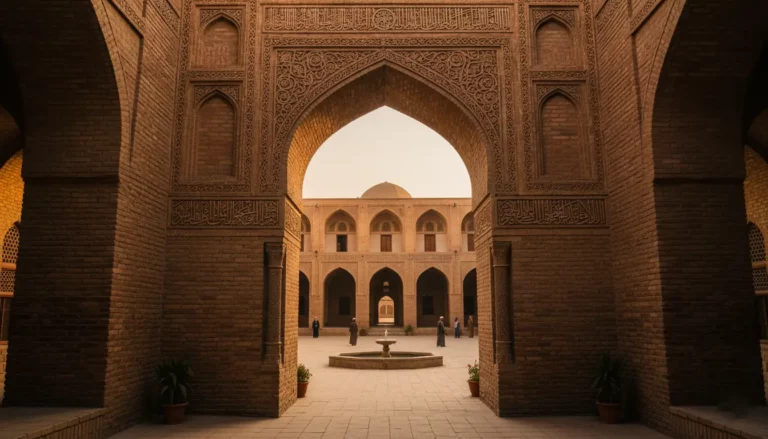
- Architecture: Neo-Moorish with Ottoman touches — horseshoe arches, geometric zellij tilework, central bimah
- Status: Partially restored (2021–2023) — Iraq’s only synagogue with active — though minimal — use.
- What you’ll see:
- Original aron kodesh (Torah ark), stripped of ornament but intact
- Faded Hebrew inscriptions on columns: “This is the gate of the Lord — the righteous shall enter” (Psalm 118:20)
- Restored women’s gallery (ezrat nashim) — now used for community archives
- Access: Contact the Iraqi Jewish Heritage Committee (via Ministry of Culture) for guided visits. Do not approach unannounced.
- Significance: Last functioning synagogue in Iraq; site of the 2021 Hanukkah lighting — first public Jewish ritual in Baghdad since 2003.
The Great Synagogue of Baghdad (Midrash Talmud Torah)
Near Shorja Market (exact location disputed)
- Built: 10th century (rebuilt 1850s)
- Status: Demolished (1980s) — replaced by a municipal office building
- Legacy: Once the largest in the Middle East — held 2,000 worshippers; housed the Ben Ezra Codex (pre-Masoretic Torah) until 1948
- How to honour it:
- Stand at the Shorja Market clock tower (approx. site)
- Visit the Iraq Museum — see fragments of its mizrach (eastern) wall carving
- Light a candle at Meir Tweig — say “Zikhronam livrakha” (“May their memory be a blessing”)
The Shemesh (Sun) Synagogue
Al-Bataween — Hidden behind a textile shop
- Built: Late 19th century
- Status: Sealed but intact — facade plastered over; interior reportedly preserved
- Clue to find it: Look for a faded sun motif (Shemesh = sun) above a metal door at #47 Al-Nahr St.
- Caution: Do not attempt entry. Locals guard it discreetly — a symbol of quiet resistance.
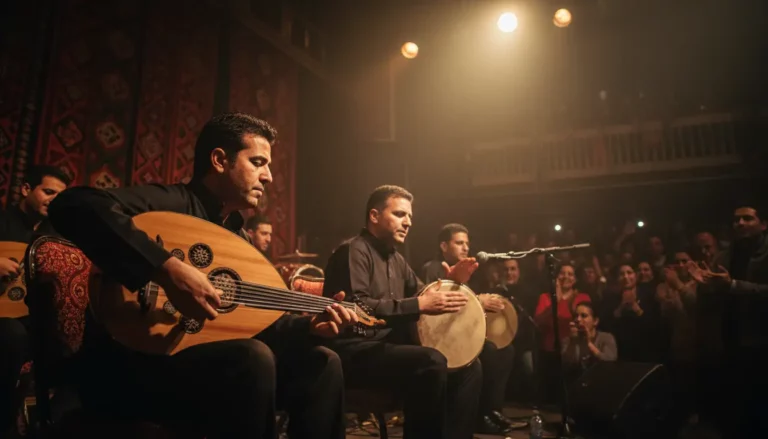
- Why it matters: Known for its piyyutim (liturgical poems) in Judeo-Arabic — a unique Iraqi musical tradition.
The Frank Iny Synagogue
Al-A’dhamiyya District
- Built: 1940s — private synagogue for the wealthy Iny family
- Status: Converted to a private library — owned by a Muslim academic who preserves Hebrew books
- Access: By invitation only — contact Dar al-Ma’mun (Iraqi cultural NGO).
- Treasure inside: A 1928 Siddur (prayer book) printed in Baghdad with Arabic translations in Rashi script.
Insider Note: Over 30 synagogue sites are documented in Baghdad — many now shops, homes, or vacant lots. The Iraqi Jewish Mapping Project (online) crowdsources locations via family memories.
Part III: Beyond Synagogues — Living Traces of Jewish Baghdad
The Jewish Cemetery (Al-Habibiyah)
Southern Baghdad — Near Al-Wahda Bridge
- History: Used from 1880s–1970s; burial place of rabbis, merchants, victims of the Farhud
- Current state: Overgrown, vandalised in 2003; ~500 headstones remain (out of 10,000+)
- What survives:
- Hebrew epitaphs — many bilingual (Hebrew/Arabic)
- Symbolic carvings: Menorahs, hands of Kohen, pitcher of Levite
- Notable grave: Yusuf Ghanima (1885–1948) — Christian historian who documented Jewish life
- Visit ethically:
- Go with a guide from Al-Amal Association for Heritage
- Bring water to clean stones (no chemicals)
- Never remove stones or fragments — report damage to authorities
Al-Bataween: The Ghost Quarter
Once Baghdad’s Jewish heart — lined with synagogues, kosher butchers, Hebrew bookshops, and the famed Beit Zilkha (Zilkha family mansion).
- What to look for:
- Door knockers with Star of David motifs (on old homes near Al-Nahr St.)
- Tile fragments with Hebrew letters in courtyard walls
- The old Alliance School (now a vocational institute) — check the 1932 cornerstone
- Talk to elders: Sit at Al-Safafeer Café (copper craftsmen’s haunt) — some recall Jewish neighbours with affection: “They made the best kubba halab.”
The Iraqi Jewish Archive — A Contested Legacy
In 2003, U.S. troops discovered 2,700 water-damaged Jewish books and documents in Saddam’s flooded Mukhabarat basement — including Torah scrolls, school records, and personal letters.
- Current status: Digitised and exhibited in the U.S. (National Archives); physical items remain in Washington under 2018 agreement (to return “when conditions permit”).
- View it:
- Online: Iraqi Jewish Archive Digital Collection (archives.gov/iraqijewisharchive)
- In Baghdad: National Library — hosts rotating exhibits of reproductions
- Controversy: Iraqi Jews in diaspora demand return to them; Iraqi government insists on national ownership. A poignant symbol of unresolved history.
Part IV: Voices of Memory — Stories That Refuse to Fade
Elias (82), Former Tailor, Al-Bataween
“Our neighbour, Rabbi Eliyahu, would bless our bread on Shabbat — even though we were Muslim. He said, ‘All food is holy when shared.’ When they came for him in ’71, my father hid his tefillin in our flour bin. I still have them.”
Linda Abdul Aziz, Iraqi-American Historian
“My grandmother’s henna recipes included za’atar from the synagogue garden. Our identity wasn’t ‘Jewish’ or ‘Iraqi’ — it was Baghdadi. To lose that hyphen is to lose the soul of the story.”
Dr. Hussein al-A’zami, Muslim Scholar, Baghdad University
“The Talmud was studied in our medieval madrasas. Saadia Gaon’s Arabic translations shaped Islamic kalam (theology). To erase Jewish Iraq is to amputate our own intellectual history.”
Part V: A New Chapter? Signs of Return and Recognition
Despite the near-total exodus, quiet efforts are underway to reclaim this heritage — not for tourism, but for truth.
Official Steps
- 2021: Iraq’s parliament passes law recognising Jews as indigenous minority (first in Arab world)
- 2023: Ministry of Culture opens Jewish Heritage Unit — hiring historians to document sites
- 2024: First public Hanukkah event at Meir Tweig — attended by diplomats, Muslim clerics, and youth
Grassroots Initiatives
- “Letters to Baghdad” Project: Iraqi Jews in Israel, UK, and U.S. send digitised family letters to National Library
- Judeo-Arabic Revival: University of Baghdad offers elective course in Jewish Baghdadi Arabic (2025 pilot)
- Culinary Memory: Chef Ali Al-Ajmi (Muslim) opens Bayt al-Yahud (“House of the Jews”) pop-up — serving tebit (Sabbath chicken), sambusak, and kleicha with family recipes from Jewish neighbours
The Last Guardian
Thaer S., 68, caretaker of Meir Tweig — Muslim, former Ba’athist, now devoted to the synagogue:
“My father told me: ‘When the Jews left, Baghdad lost its laughter.’ I stay because memory is a duty — not a choice.”
Part VI: Visiting Responsibly — A Guide for the Thoughtful Traveller
Before You Go: Preparation as Respect
- Research deeply: Read The Last Jews in Baghdad (Nissim Rejwan), Baghdad’s Jewish Stories (oral history project)
- Contact in advance:
- Iraqi Ministry of Culture – Heritage Dept. ([email protected])
- Al-Amal Association (al-amal-iraq.org) — arranges ethical heritage tours
- Never come as a “tourist” — come as a learner, witness, or descendant.
On the Ground: Protocol and Presence
| Do’s | Don’ts |
|---|---|
| ✅ Dress modestly (shoulders/knees covered) — men and women | ❌ Wear Jewish symbols (kippah, Star of David) openly — safety risk |
| ✅ Bring a small gift: high-quality dates, Arabic coffee | ❌ Take photos of people without explicit permission |
| ✅ Ask: “Hal yumkinunī ziyārat al-makān bi-ḥurmat?” (“May I visit this place respectfully?”) | ❌ Use “Israel” or “Zionist” in conversation — focus on Iraqi identity |
| ✅ Record oral histories (with consent) for archives | ❌ Share GPS coordinates of fragile sites online |
🔹 Sites Accessible to Visitors (as of 2025)
| Site | Access Level | How to Arrange |
|---|---|---|
| Meir Tweig Synagogue | Limited guided tours | Via Ministry of Culture (2-week advance request) |
| Al-Habibiyah Cemetery | Day visits with guide | Al-Amal Association (small donation supports upkeep) |
| National Library – Jewish Archive Exhibit | Open to public | Free entry; bring passport |
| Shorja Market (Jewish quarter traces) | Self-guided (with map) | Download “Jewish Baghdad Walk” PDF from heritage.gov.iq |
| Iraq Museum – Judaica Collection | Open Tues–Sat | Request “Mesopotamian Judaism” curator tour |
For Descendants of Iraqi Jews
- Family Research: Contact Babylonian Jewry Heritage Center (Or Yehuda, Israel) — holds 500,000+ Iraqi Jewish records
- Pilgrimage Support: Return to Babylon NGO (UK-based) assists with visas, guides, and emotional preparation
- Ritual Opportunity: Arrange a yizkor (memorial) prayer at Meir Tweig — coordinated with caretaker Thaer (requires rabbinic letter)
Part VII: Preserving the Legacy — How You Can Help
- Digitise & Share:
- Upload family photos/documents to Iraqi Jewish Memory Project (iraqijewishmemory.org)
- Support Local Guardians:
- Donate to Al-Habibiyah Cemetery Restoration Fund (via Al-Amal)
- Amplify Voices:
- Share oral histories (with permission) — e.g., YouTube channel “Amudim: Pillars of Baghdad”
- Visit Ethically:
- Choose Iraqi-run heritage tours — revenue stays local
A Final Thought: In the Talmud (Tractate Berakhot 61b), it is written: “Wherever the Jewish people were exiled, the Shekhinah (Divine Presence) went with them.”
Perhaps — just perhaps — She never truly left Baghdad.
Perhaps She waits, in the dust motes dancing in a sunlit pîyale of tea, in the curve of a hidden Hebrew letter, in the silence between the calls to prayer —
For us to remember.
To return.
To repair.
Further Resources
- Books: The Jews of Iraq (Nissim Rejwan); Operation Babylon (Marina Benjamin)
- Documentaries: Remember Baghdad (2017); The Last Jews of Iraq (BBC, 2023)
- Archives:
- Iraqi Jewish Archive (U.S. National Archives)
- Babylonian Jewry Heritage Center (Israel)
- Digital Museum of Iraqi Jewish Life (iraqijewishmuseum.org)
- Organisations:
- Al-Amal Association for Heritage (Baghdad)
- Association of Jews from Iraq (Paris)
- Justice for Jews from Arab Countries (JJAC)
If you’re ready to explore Iraq, get in touch with us today. We offer complete travel packages, including flights, accommodation, and guided tours tailored to your needs. Simply fill out the form below or contact us on WhatsApp at +441992276061 for quick assistance. Let us make your journey to Iraq smooth and unforgettable!