Iraq’s Thriving Theatre Scene – From Baghdad to Basra
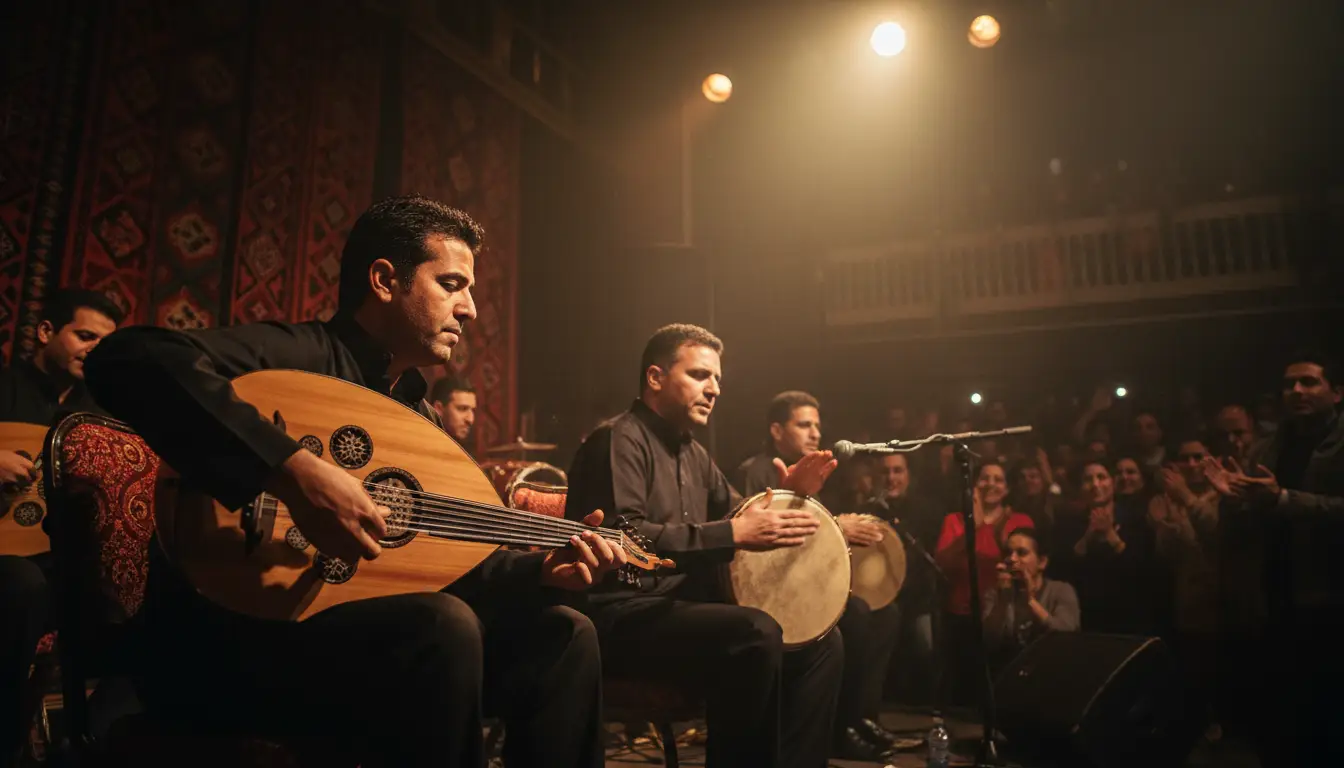
In a nation whose recent history has been narrated through the language of war, loss, and rupture, an unexpected renaissance is unfolding — not in parliament chambers or reconstruction zones, but in dimly lit auditoriums, repurposed school halls, and open-air courtyards.
Iraq’s theatre scene is not merely surviving.
It is thriving.
From clandestine basement performances during the sanctions era to bold, internationally acclaimed productions today, Iraqi theatre has long served as the country’s conscience, mirror, and megaphone — a space where trauma is transformed, memory is staged, and hope is rehearsed.
Unlike film or television — vulnerable to censorship, budget cuts, and infrastructure collapse — theatre in Iraq requires only three things:
a story, a body, and an audience willing to listen.
This is the power of the live: no signal needed. No electricity required. Just presence.
Today, in Baghdad’s crumbling al-Rasheed district, in Basra’s sun-baked cultural centres, in Mosul’s rebuilt community halls, a new generation of playwrights, directors, and actors is rewriting the national narrative — not with weapons or decrees, but with monologues, movement, and moral courage.
Let us step into the wings — and witness a theatre that refuses to go dark.
Part I: Roots in Ruin — A Brief History of Resistance
Iraqi theatre did not begin with Shakespeare or Brecht.
It began with ta‘ziya (Shi’a passion plays), muhawara (comic dialogues), and khayal al-zill (shadow puppetry) — ancient oral traditions that carried history, satire, and spiritual inquiry across generations.
Modern Iraqi theatre emerged in the 1920s, but its golden age came in the 1950s–1970s, when state patronage, intellectual freedom, and pan-Arab solidarity fuelled a wave of experimental, politically engaged work.
Key milestones:
- 1946: Founding of the Iraqi Artists’ Syndicate — theatre as professional vocation
- 1959: First National Theatre Festival — featuring works by Yusuf al-‘Ani (Iraq’s “father of modern theatre”)
- 1970s: Rise of al-Fanar (The Lighthouse) Troupe — blending Iraqi folklore with Brechtian alienation
Then came the long winter.
Under the Ba’ath regime, theatre was co-opted for propaganda — yet subversive artists coded dissent in metaphor: a crumbling house as the state; a blind king as tyranny; a silent chorus as the silenced people.
During the 1990s sanctions, troupes performed in basements with candlelight, using bread sacks for costumes and kerosene tins as drums.
In 2003–2017, theatre became urgent therapy — processing invasion, sectarian violence, and ISIS atrocities through verbatim testimony and physical storytelling.
Yusuf al-‘Ani (1927–2019), in his final interview:
“They bombed our theatres, but not our imaginations. A script hidden in a Quran is still a script. A stage drawn in the dust is still a stage.”
Part II: Baghdad — The Beating Heart
Al-Rasheed Theatre: Phoenix from Ashes
(Al-Khulafa District, Baghdad)
Once Iraq’s grandest theatre — opened in 1980 with Soviet-designed acoustics and marble lobbies — it was looted and burned in 2003. For 15 years, it stood roofless, pigeons nesting in the orchestra pit.
Then, in 2021, a coalition of artists, engineers, and volunteers began rebuilding — brick by brick, with their own hands.
- 2024 Reopening: “The House That Refused to Fall” — a docu-drama by Mayada al-Samarrai, featuring real survivors of the 2007 bombings that targeted the adjacent Al-Sha’ab stadium.
- Innovation: Solar-powered lighting; mobile stage for displaced communities.
- Symbol: The restored golden curtain — stitched by 40 women from different sects, each adding a thread in their tribal colour.
Don’t miss: “Letters to the Future” — audience members write hopes on paper boats, floated across the stage’s shallow water trench at finale.
Masrah al-Tifl (Children’s Theatre)
(Al-Mansour, Baghdad)
Founded in 2018 by Dr. Lina Habib, child psychologist and theatre artist, this troupe works with war-affected children — not to “perform trauma,” but to reclaim agency.
- Method: Playback Theatre — children dictate stories; actors improvise them on the spot.
- Landmark Production: “The Day the Sky Forgot Blue” — created with Yazidi girls from Sinjar; toured UNICEF centres across Iraq.
- Impact: 83% of participants showed reduced PTSD symptoms after 12 weeks (2023 study, Baghdad University).
💬 “We don’t teach them to act. We teach them to say: ‘This happened. And I am still here.’”
— Dr. Lina Habib
Part III: Basra — Where the Gulf Winds Carry New Voices
Basra’s theatre is saltier, bolder, more irreverent — shaped by port-city cosmopolitanism, Bedouin oral traditions, and the ecological crisis of the drying Shatt al-Arab.
Al-Mina Cultural Centre
(Corniche Road, Basra)
A former British consulate, now home to Iraq’s most experimental youth troupe: “Shatt” (The Shore).
- Signature Style: Environmental theatre — performances on floating barges, in abandoned oil tanks, along receding marsh edges.
- 2024 Hit: “Fish Without Water” — a dark comedy about corruption, climate collapse, and a man who sells bottled “original Tigris water” (it’s tap).
- Community Impact: Runs “Theatre for Fishermen” — workshops on labour rights, staged on docks at sunset.
The Basra Monologue Project
A grassroots movement collecting real stories from citizens — taxi drivers, nurses, date farmers — performed verbatim by local actors.
- Most Powerful Piece: “Umm Hassan’s Well” — about a woman who walks 8km daily for water, only to find her ancestral well poisoned by industrial runoff.
- Distribution: Performed in 12 villages; filmed for TikTok — 1.2M views across Iraq.
Basrawi Wisdom:
“In Baghdad, they debate the past. In Basra, we stage the future — because if we don’t, the sea will take it.”
Part IV: The North — Healing Through Performance
Mosul’s “Phoenix Troupe”
(Al-Ma’mun Cultural Centre, Mosul)
Formed in 2018 by survivors of ISIS occupation, this collective creates “theatre of repair” — not to forget, but to integrate.
- Breakthrough Work: “The Book Burner’s Daughter” — a young woman reconstructs her father’s destroyed library, letter by letter, while he grapples with his collaboration.
- Technique: Forum Theatre — audience stops performance, steps in to change the ending.
- Impact: Used in reconciliation workshops between Sunni and Yazidi communities.
Erbil’s Kurdish-Arab Theatre Initiative
A rare cross-ethnic collaboration, staging bilingual productions (Sorani Kurdish/Arabic) on shared history.
- 2024 Production: “Two Rivers, One Boat” — about a Kurdish fisherman and Arab farmer who must navigate a shrinking river — and their prejudices — to survive.
- Reception: Performed in Erbil, Kirkuk, and Sulaymaniyah — standing ovations, followed by community dialogues.
Director Aram Salah:
“When an Arab actor speaks Kurdish on stage — and a Kurdish audience laughs at the joke — that is peace. Not in treaties. In timing.”
Part V: The New Vanguard — Playwrights & Innovators
Mayada al-Samarrai (b. 1985, Baghdad)
Iraq’s most produced contemporary playwright.
- Themes: Women’s silence, state erasure, archival memory
- Masterpiece: “The Archive of Missing Things” — a woman collects fragments of banned books, torn family photos, and burnt ID cards to build a “museum of absence.”
- Global Reach: Translated into 12 languages; staged at Edinburgh Fringe, Avignon Festival.
Ali Hassan (b. 1992, Basra)
Pioneer of audio theatre — for areas without safe performance spaces.
- Project: “Voices in the Dark” — USB drives distributed in IDP camps; plug into any radio.
- Style: 15-minute immersive soundscapes — footsteps in a ruined school, a mother’s lullaby over artillery, a poet reciting in a bomb shelter.
Nisreen Al-Hadidi (b. 1989, Mosul)
Deaf theatre artist and founder of “Silent Stage” — Iraq’s first troupe for deaf and hearing performers.
- Innovation: Iraqi Sign Language (ISL) integrated with spoken Arabic, rhythmic stomping, and light projections.
- Production: “The Sound of Light” — about a deaf girl who “hears” the city’s history through vibrations in ancient walls.
Her Mission:
“Theatre isn’t about hearing words. It’s about feeling truth. And truth vibrates.”
Part VI: Challenges — The Stage Is Never Neutral
Despite the renaissance, Iraqi theatre faces real hurdles:
- Funding: 92% of troupes self-finance; international grants often come with political strings.
- Censorship: Local authorities still ban plays deemed “sectarian” or “immoral” — e.g., a 2023 production on LGBTQ+ youth was shut down in Najaf.
- Safety: Female actors face harassment; some perform under pseudonyms.
- Infrastructure: Few venues have working lights, sound, or fire exits.
Yet — they persist.
Because in Iraq, not staging a play can be as political as staging one.
Part VII: How to Engage — As a Visitor, Supporter, or Ally
If You Visit Iraq
- Attend a show at Al-Rasheed Theatre (book via Baghdad Cultural Office)
- Join a “Theatre Walk” in Basra — guided tour of historic performance sites
- Visit Al-Ma’mun Café in Mosul — nightly open-mic “Hikayat min al-Khashab” (“Stories from the Stage”)
If You Can’t Travel
- Stream: Iraqi Theatre Digital Archive (free, subtitled) — iraqitheatre.org
- Support: Theatre for Iraq (UK-based NGO funding youth troupes)
- Amplify: Share #IraqiTheatre — spotlight artists like @MayadaPlays, @ShattTroupe
Ethical Engagement
- Never film performances without consent
- Never label work as “trauma porn” — ask: What does this piece do?
- Do credit Iraqi artists first — not Western “mentors” or funders
Voices from the Stage
Yasmin, 22, actor (Baghdad):
“My grandmother hid scripts under her abaya during the 90s. I carry them in my phone. Same mission: keep the story alive.”
Hussein, 45, stagehand (Mosul):
“I rebuild sets by day. By night, I rebuild my city — in wood, cloth, and light.”
Dr. Layla, theatre scholar (Basra University):
“They ask: ‘Why theatre in a broken country?’ I ask: ‘How do you fix a country without first imagining it whole?’”
Conclusion – The Curtain Never Falls
In Iraqi theatre, there are no “final bows.”
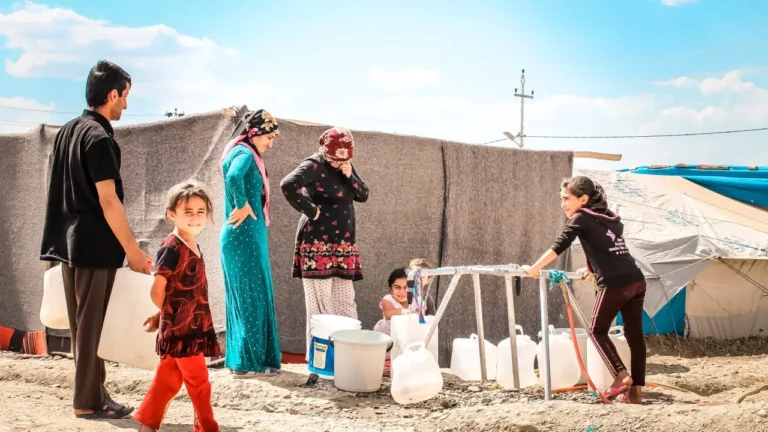
Because the work continues — in the alley where a teenager rehearses lines on his way home, in the village where elders teach muhawara to children, in the refugee camp where a mother turns her tent into a stage.
This is not entertainment.
It is embodiment.
It is evidence.
It is endurance.
When the lights dim and the first line is spoken — in Baghdadi Arabic, in Basrawi dialect, in Kurdish, in silence — Iraq does not remember its wounds.
It remembers its voice.
And that — more than any monument — is how a nation rises.
Further Reading & Viewing
- Plays: The Archive of Missing Things (Mayada al-Samarrai); Fish Without Water (Ali Hassan)
- Documentaries: Stage of War (Al Jazeera, 2022); The Last Curtain Call (BBC Arabic, 2024)
- Organisations:
- Iraqi Artists’ Syndicate (Baghdad)
- Shatt Troupe (Basra)
- Phoenix Theatre Collective (Mosul)
- Festival: National Iraqi Theatre Festival — held annually in Baghdad (October)
If you’re ready to explore Iraq, get in touch with us today. We offer complete travel packages, including flights, accommodation, and guided tours tailored to your needs. Simply fill out the form below or contact us on WhatsApp at +441992276061 for quick assistance. Let us make your journey to Iraq smooth and unforgettable!