Learning Arabic Dialects – Essential Phrases for Travelling Iraq
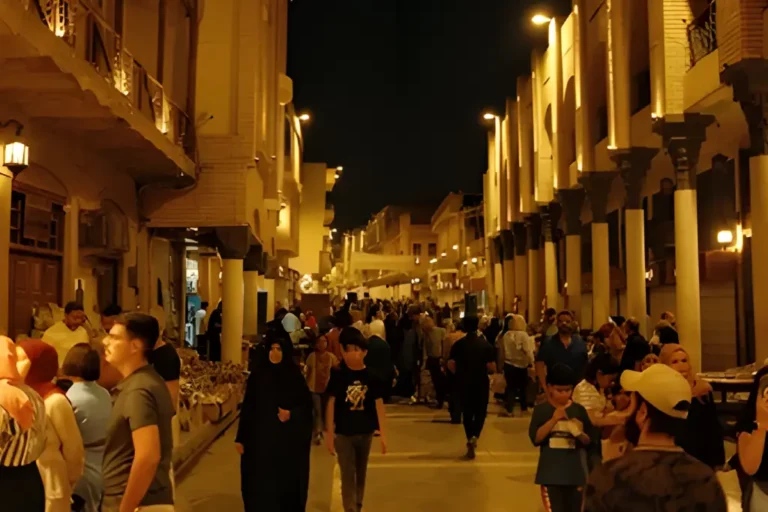
Within five minutes of landing in Baghdad, you’ll hear:
“Shlōnich? Shnō yimma?! ʿAṭīni ʿalbīn wīd!”
(“How are you? What’s wrong?! Give me two beers!”)
… and realise: Iraqi Arabic is a different world.
With over 60% lexical divergence from MSA, unique phonetics (hello, /ch/ and /g/ sounds!), and regional dialects as distinct as Spanish and Portuguese, Iraqi Arabic — ʿIrāqi — is one of the most conservative yet dynamic Arabic dialects alive.
Why? Because it’s layered:
- Akkadian & Aramaic substrates (from ancient Mesopotamia)
- Persian & Turkish loanwords (Ottoman & Safavid eras)
- Bedouin, Kurdish, and tribal influences
- Modern urban slang (Baghdad vs. Mosul vs. Basra)
This guide focuses on practical, spoken Iraqi Arabic (Sorani-influenced in the north, Gulf-tinged in the south) — the dialects you’ll actually hear on the street, in çayxane, and around dinner tables.
No grammar lectures. No verb conjugation tables.
Just essential phrases — with pronunciation, context, and why they matter.
Let’s talk like Iraqis do: warm, witty, and full of heart.
Part I: Understanding Iraq’s Dialect Map
Iraq isn’t one dialect — it’s three primary zones, each with sub-varieties:
| Region | Dialect | Key Features | Where You’ll Hear It |
|---|---|---|---|
| Central Iraq (Baghdad, Babylon, Karbala) | Baghdadi Arabic | – Uses /ch/ (چ) for qaf (ق) → “chalb” (dog) |
- /g/ for qaf in some words → “gahwa” (coffee)
- Heavy Turkish/Persian loans (dukkān, bāshā) | Most widely understood; media standard | | Northern Iraq (Mosul, Kirkuk, Sulaymaniyah) | Moslawi / Kurdish-influenced | – Retains qaf (ق) → “qalb” (heart)
- Kurdish loanwords (barān for rain, dilōp for friend)
- Softer intonation | Mosul, Nineveh Plains, Duhok | | Southern Iraq (Basra, Nasiriyah, Amarah) | Basrawi / Gulf-Arabic influenced | – Gahwa → “gawiya”
- /j/ for qaf → “jalb” (dog)
- Bedouin vocabulary (yā hala! for welcome) | Marshes, Shatt al-Arab, border with KSA |
Key Insight:
Baghdadi is your safest bet — understood nationwide (like American English in the U.S.). But learning one regional phrase shows deep respect.
Part II: Survival Phrases — The First 10 Minutes
Greetings: It’s Not “Hello” — It’s Connection
| Arabic (Script) | Transliteration | Pronunciation | Literal Meaning | When to Use |
|---|---|---|---|---|
| شلونچ؟ | Shlōnich? (m) / Shlōnich? (f) | sh-LOH-nish | “How are you?” (lit. “What’s your state?”) | Universal opener — use with shopkeepers, drivers, elders |
| الحمد لله | Al-ḥamdu lillāh | al-HAM-doo lil-LAH | “Praise be to God” | Standard reply to Shlōnich? |
| چـَـشْ؟ | Chash? | chahsh (like “ch” in chair + “sh”) | “What’s up?” (very casual) | With peers, youth, in çayxane |
| چـَـشْ يمّه؟! | Chash yimma?! | chahsh YIM-mah | “What’s wrong, mom?!” (humorous) | Light-hearted banter — never with strangers |
Pro Tip: Add “ya ḥabībī” (m) / “ya ḥabībti” (f) — “my dear” — to soften requests:
“Shlōnich, ya ḥabībī?” → Instant warmth.
Thanks & Politeness: Where Respect Lives
| Arabic | Transliteration | Pronunciation | Nuance |
|---|---|---|---|
| چـَـكـَـران | Chakran | CHAK-ran | “Thank you” (Turkish-derived) — most common |
| مرچـِـبا | Marčhiba | mar-CHIH-ba | “Thank you” (Persian-derived) — poetic, formal |
| ما چـَـسـَـلـَـمـت | Mā chaslamt | mah cha-salamt | “I didn’t get it” (lit. “I didn’t receive”) |
| بـَـس | Bas | bahs | “Enough,” “Just,” “Only” — Iraq’s most versatile word |
Golden Rule: Never say “shukran” (MSA “thank you”) alone — Iraqis use it only in sarcasm:
“Shukran… ʿalā al-ḥarīq!” (“Thanks… for the fire!” = “Thanks for nothing!”)
Part III: Eating & Drinking — Where Culture Sits at the Table
At the Café or Restaurant
| Phrase | Transliteration | When to Use | Cultural Note |
|---|---|---|---|
| چـَـيّ وحدة، من جواز | Chay wāḥda, min jawwāz | “One tea, please” (lit. “from permits”) | Jawwāz = old Ottoman term for “allowed” — still used! |
| عطني علبـين ويد | ʿAṭīni ʿalbīn wīd | “Give me two beers” | ʿAlbīn = bottles; wīd = “give” (imperative) |
| چـَـيّ موصلي؟ | Chay Mōṣlī? | “Mosul-style tea?” (strong, with cardamom) | Shows regional awareness — earns smiles |
| الحساب، من فضلك | Al-ḥisāb, min faḍlik | “The bill, please” | Say after finishing — never rush |
🍽️ Key Vocabulary:
- Samūn = Mosul flatbread
- Tibit = Sabbath chicken (now secular comfort food)
- Kubba halab = Spiced meat dumplings (say “kubba, la tiswīnha ḥāra!” — “kubba, don’t make it spicy!” — if sensitive)
- Daqqūs = Green olive paste — always offer to share
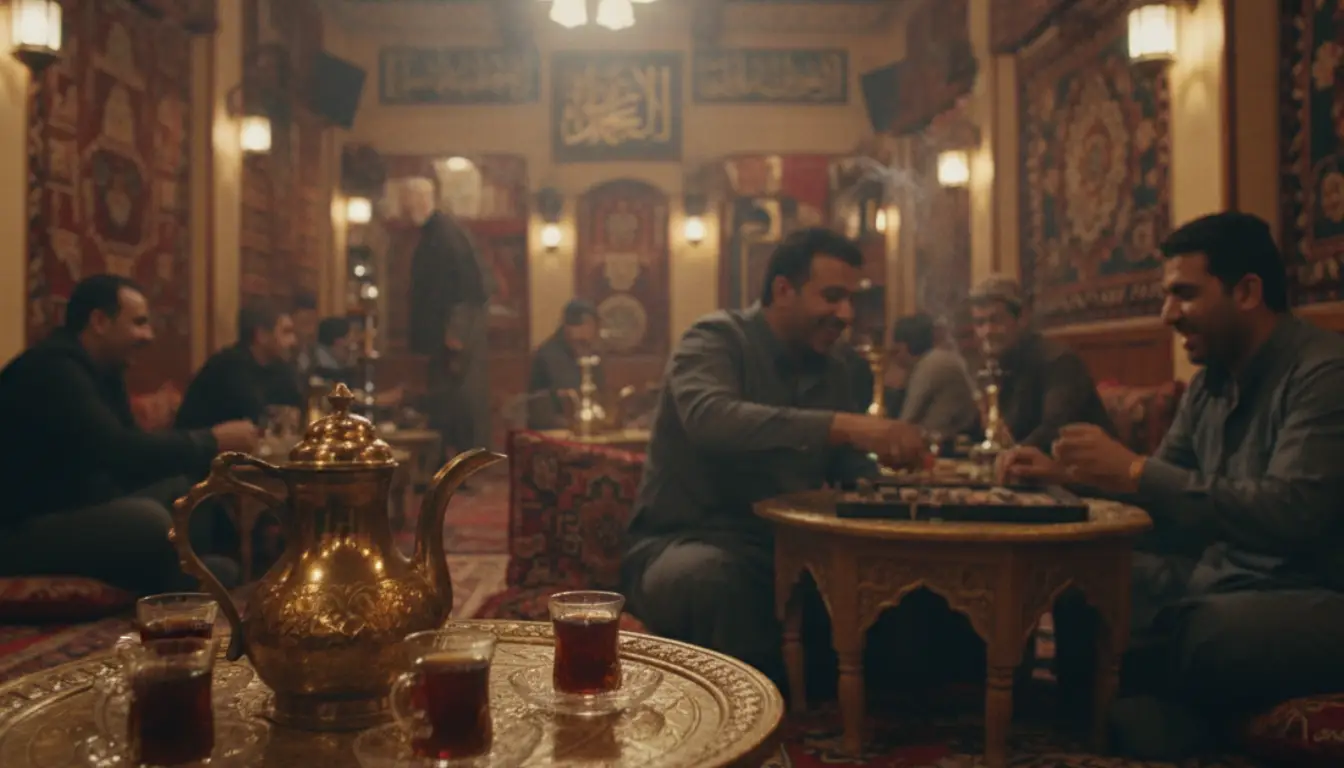
Tea Culture (Critical!)
- One cup = polite refusal to stay
- Two cups = friendship forming
- Three cups = “You’re family now”
Say:
“Chay thālith, min fadlik” — “Third tea, please”
→ You’ve just accepted deep hospitality.
Part IV: Shopping & Bargaining — The Dance of Respect
In the Sūq (Market)
| Phrase | Transliteration | Strategy |
|---|---|---|
| بـَـچـْـدَد؟ | Bachdad? | “How much?” (lit. “Baghdad price?” — humorous) |
| هـَـالـْـسـِـعـْـر؟! مـَـا بـِـچـْـدَد! | Hāl-siʿr?! Mā bachdad! | “This price?! No way!” (playful shock) |
| خـُـذها عـَـلى راسي | Khudha ʿalā rāsī | “Take it off my head” (idiom: “Give me a discount”) |
| شـَـوَيّـة بس | Shwayya bas | “Just a little” — the magic phrase |
Bargaining Rules:
- Start at 40% of asking price
- Smile, sip tea, never walk away angrily
- Final price? Say: “Māshī, hadha māʿqūl” — “Okay, this is reasonable”
→ Vendor will likely throw in free dates.
Part V: Getting Around — Taxis, Buses, and Trust
With Drivers
| Phrase | Transliteration | Why It Works |
|---|---|---|
| چـَـيّ وحدة، عـَـلى السـَّـريع | Chay wāḥda, ʿalā al-sarīʿ | “One tea, on the fast [route]” — i.e., no detours! |
| چـُـوّـِـچـْـلي، بـَـس مـَـا تـِـروح عـَـلى الحـَـظر | Chawwilī, bas mā tirūḥ ʿalā al-ḥaẓr | “Take me, but don’t go to the checkpoint” |
| شـَـكـْـران، يـَـا أخـي | Shakran, yā akhī | “Thanks, my brother” — builds rapport |
Careem/Uber Tip:
Type destination in Arabic:
- Madīnat al-Ṭibb = Medical City
- Jisr al-Ahras = Old Bridge
- Sūq al-Shawāf = Goldsmiths’ Market
Part VI: Deeper Connection — Phrases That Open Hearts
Expressing Emotion (Iraqis feel language)
| Phrase | Transliteration | When to Use | Power |
|---|---|---|---|
| والله، يـَـمّـه! | Wallāh, yimma! | “I swear, mom!” (shock, joy, frustration) | Instant bonding — yimma = universal emotional anchor |
| رَبـّـي يـَـحفـَـظـچ | Rabbī yaḥfaẓich | “May God protect you” | Said when parting — deeper than maʿa ssalāma |
| أنتَ مـِـن الـَّـلي يـِـحـَـبّـونـچ | Inta min illi yiḥibbūnich | “You’re one of those who love me” | High praise — implies trust |
| مـَـا تـِـنسـَـني | Mā tinsānī | “Don’t forget me” | Poignant — used by elders, friends |
In Times of Hardship
| Phrase | Transliteration | Meaning | Context |
|---|---|---|---|
| إلـَـهـي يـِـسـَـعـدچ | Ilāhī yisaʿdich | “May God make it easy for you” | When someone shares grief |
| كـُـل شـَـيّ يـِـروح ورا ما يـِـجـي | Kull shay yirūḥ warā mā yijī | “Everything passes — what’s coming is behind it” | Stoic wisdom — like “This too shall pass” |
Real-Life Example:
After hearing your story, an elder may say:
“Anta min illi yiḥibbūnich… Rabbī yaḥfaẓich.”
You’ve just been adopted — symbolically.
Part VII: Regional Gems — One Phrase per City
| City | Phrase | Transliteration | Meaning | Why It Matters |
|---|---|---|---|---|
| Baghdad | چـَـيّ زَلـْـزَلـة! | Chay zalzala! | “Earthquake tea!” (very strong) | Insider slang — shows you’re not a tourist |
| Mosul | بـَـرّد، يـَـلـلا | Barrid, yallā | “Cool it, come on” (calm down, relax) | Classic Moslawi chill — use in tense moments |
| Basra | يـَا هـَـلـا و سـَـهـْـلا | Yā halā w sahlā | “Welcome!” (Bedouin-style) | Southern warmth — Basrawis pride themselves on hospitality |
| Sulaymaniyah | چـَـوان؟ | Chawān? | “How are you?” (Sorani Kurdish-influenced) | Shows respect for Kurdish identity |
Bonus: In Erbil, say “Ba xêr hatî!” (Kurdish for “Welcome!”) — locals light up.
Part VIII: What Not to Say — Avoiding Landmines
| Phrase to Avoid | Why | Better Alternative |
|---|---|---|
| شـُـكـْـران (alone) | Sounds sarcastic or robotic | Chakran or Marčhiba |
| أنـا مـُـسـْـلـِـم (“I’m Muslim”) | Assumes religion; many Iraqis are Christian, Yazidi, Sabean | “Anā min [country]” (“I’m from…”) |
| الـعـراق مـُـخـيف (“Iraq is scary”) | Deeply offensive — implies they live in fear | “Al-ʿIrāq qawī” (“Iraq is strong”) |
| أيـن الـمـرحـاض؟ (MSA “Where is the bathroom?”) | Sounds like a textbook — unnatural | “Wīn al-ṭumm?” (“Where’s the loo?” — ṭumm = Iraqi slang) |
Never use “Yā ʿarab!” (“Hey Arab!”) — tribal identity is complex; better: “Yā akhī” (“My brother”).
Part IX: Learning Tools — Iraqi-First Resources
| Resource | Why It’s Great | Link |
|---|---|---|
| “Iraqi Arabic with Nada” (YouTube) | Baghdadi dialect, street scenarios, humour | youtube.com/@IraqiArabicWithNada |
| “Chay w Shwayya” (Podcast) | 10-min daily lessons — market, transport, food | Spotify / Apple Podcasts |
| “A Dictionary of Iraqi Arabic” (John McCarthy) | The academic reference — 15,000+ entries | Georgetown UP |
| Tandem App | Filter for Iraqi language partners | tandem.net |
Download: Iraqi Arabic Keyboard (Google Play/App Store) — includes چ, گ, پ characters.
Part X: A Final Note — Language as Love
In Iraq, speaking the dialect isn’t about fluency.
It’s about effort.
When you stumble through “Shlōnich… chakran… shwayya bas…”, Iraqis don’t hear errors.
They hear:
“You tried. You cared. You saw us — not as a headline, but as people.”
And in a country that has been misrepresented for decades, that is the most powerful phrase of all.
So go ahead.
Mispronounce čakran.
Forget the ch in čalb.
Laugh when you accidentally say “šačča” (penis) instead of “sačča” (bag) — yes, it happens.
Because in Iraq, a wrong word spoken with respect is worth more than perfect silence.
Shlōnich?
Go find out.
Quick Reference Cheat Sheet
(Print & Keep in Wallet)
| English | Iraqi Arabic | Pronunciation |
|---|---|---|
| Hello / How are you? | شلونچ؟ | sh-LOH-nish |
| I’m fine, thanks | الحمد لله، چكران | al-HAM-doo lil-LAH, CHAK-ran |
| How much? | چشدَد؟ | chahsh-DAHD? |
| One tea, please | چيّ وحدة، من جواز | chay WAH-hda, min jaw-WAZ |
| Where is…? | وين…؟ | ween…? |
| Thank you (deeply) | مرچِـبا | mar-CHIH-ba |
| I don’t understand | ما چسلمت | mah cha-sa-LAMT |
| Let’s go! | يلا! | yah-LAH! |
| Delicious! | زَيـّـن وَلاّي! | ZAYYIN wa-LAY! |
| Goodbye (see you) | مَع السّـلامة، ما تنساني | ma‘a s-sa-LAH-ma, mah tin-SAH-nee |
If you’re ready to explore Iraq, get in touch with us today. We offer complete travel packages, including flights, accommodation, and guided tours tailored to your needs. Simply fill out the form below or contact us on WhatsApp at +441992276061 for quick assistance. Let us make your journey to Iraq smooth and unforgettable!