Living with Iraqi Nomads – A Week with the Bedouin of Al-Jazirah
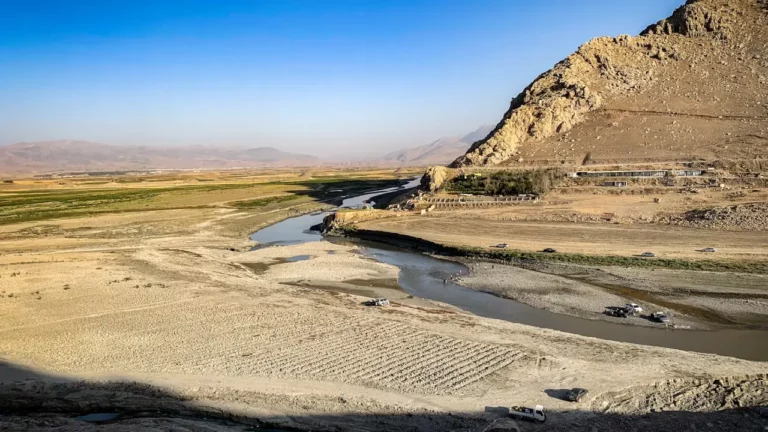
In a land often defined by headlines of conflict and oil, a quieter, older Iraq endures — one written in the curl of a goat’s horn, the scent of cardamom-laced coffee over coals, and the slow arc of falcons against a powder-blue dawn. This is the Iraq of the Bedouin, the nomadic pastoralists of Al-Jazirah — the “Island” of land between the Tigris and Euphrates rivers, stretching from Mosul down to the Syrian border.
Al-Jazirah — not a true island, but a vast, undulating plateau of steppe, basalt plains, and seasonal wadis — has been home to Arab tribes for over 1,400 years. Here, the Shammar, Dulaym, and Jubur confederations still follow seasonal migrations (dirah), herding camels, sheep, and goats in time with ancient ecological knowledge encoded in oral poetry and star charts.
This is not performative tourism. This is immersion — a week spent sleeping under goat-hair tents (beit al-sha’ar), drinking bitter qahwa from the same pot as elders who remember pre-Saddam droughts, and learning that hospitality (diyafa) isn’t a gesture — it’s a covenant.
As a guest, you are not an observer. You are protected. You are fed. You are, for a time, one of them.
This guide is for the thoughtful, patient, and deeply respectful traveller — ready to trade Wi-Fi for wind, schedules for sunrises, and expectations for empathy.
Let’s step into the dirah.
Why Al-Jazirah? Why Now?
While Bedouin communities exist across the Arabian Peninsula and Levant, Iraqi Bedouin culture remains distinct — less commercialised, less altered by oil wealth, and profoundly shaped by decades of displacement, drought, and resilience.
Key reasons Al-Jazirah matters:
- Cradle of Arab Identity: The Shammar trace lineage to pre-Islamic poets of Najd; their dialect preserves archaic Arabic vocabulary lost elsewhere.
- Ecological Wisdom: Their himā system (communal grazing reserves) is a proto-conservation model now studied by UN agencies.
- Cultural Continuity: Despite urbanisation, over 15% of Al-Jazirah’s population still engages in seasonal pastoralism — a lifeline, not a relic.
- Post-Conflict Reconnection: After ISIS displaced many tribes from Anbar and Nineveh, families are returning — rebuilding beit al-sha’ar, reclaiming wells, reviving oral histories.
To visit now is to witness a quiet renaissance — one rooted not in nostalgia, but in necessity and pride.
🌾 Fun fact: The word Bedouin (badawī) literally means “inhabitant of the bādiyah” — the open desert or steppe — in contrast to ḥaḍarī (town-dweller). It’s not an ethnic label, but a lifestyle.
Part I: Preparing for the Journey — Respect as Your Passport
Permission & Partnership: The Non-Negotiable First Step
You cannot simply “show up.” Bedouin hospitality is bound by sharaf (honour) and ‘ird (family dignity). Unannounced strangers, especially foreigners, risk suspicion — or worse, unintended insult.
The Right Way In:
- Work with a trusted local NGO or cultural liaison — e.g.,
- Al-Jazirah Heritage Initiative (Mosul-based, works with Shammar elders)
- Iraq Nature Iraq (supports pastoralist-led conservation; arranges ethical homestays)
- Dar al-Atraqchi Cultural Travel (Baghdad office, specialises in rural immersion)
- Submit a request 4–6 weeks ahead, including:
- Your name, nationality, profession
- Purpose (e.g., “cultural learning,” not “adventure” or “exotic experience”)
- Dietary needs, gender (important for accommodation)
- Await tribal approval — often granted by the sheikh or mukhtar (village head) after consultation.
Never photograph people, tents, or livestock without explicit verbal consent — and even then, ask again before posting online.
What to Bring (and What to Leave Behind)
| Bring | Leave Behind |
|---|---|
| • Modest clothing: long cotton trousers, loose tunics, headscarf (for women — even non-Muslim) <br> • Sturdy sandals (not hiking boots — they insult hosts who walk barefoot on rugs) <br> • Small gifts: high-quality dates (Medjool), Arabic coffee beans, children’s notebooks/crayons <br> • Reusable water bottle (tap water is unsafe) <br> • Solar-powered charger (no electricity in camps) | • Alcohol, pork products <br> • Short shorts, sleeveless tops <br> • Loud electronics (speakers, drones) <br> • Political books or maps with disputed borders <br> • Excessive cash (offer payment only if asked — hospitality is not transactional) |
Part II: Arrival — The First Hour Defines the Week
Crossing the Threshold: Rituals of Welcome
Your host family — likely a multi-generational unit led by an elder couple — will meet you at a pre-arranged point (often a well or crossroads). From the moment you step from the car:
- Greeting:
- Men: Right hand over heart → handshake → “As-salāmu ‘alaykum”
- Women: Hand over heart, slight bow — wait for her to initiate handshake.
- Entry to the beit al-sha’ar:
Remove shoes before the tent flap. Step in with your right foot first — a tradition for auspicious beginnings. - The Coffee Ceremony (al-qahwa al-‘arabiyya):
- Served in tiny handleless cups (finjān), no sugar.
- Three cups are customary:
- Al-ṣalām (peace)
- Al-ḥubb (affection)
- Al-ḥadā’ (guidance)
- To decline the third cup, gently shake your finjān or say “Shukran, ṣabbāḥt bi-l-khayr” (“Thank you, I am satisfied”).
Critical Insight: Refusing coffee is like refusing peace. Even if caffeine keeps you awake in 40°C heat — drink it.
Your Space in the Tent
The beit al-sha’ar — woven from black goat hair — is a marvel of desert engineering:
- Cool in summer (fibres expand when wet, tightening against dust storms)
- Warm in winter (dense weave traps heat)
- Scented with smoke, wool, and dried herbs
You’ll sleep on thick rugs (bisāṭ), with a thin mattress and blanket. Privacy is communal — partitions may be hanging cloth. Toilets are pits (latrines) at the camp’s edge; washing is done with ibrīq (pouring jug) and ṭasht (basin).
Your “room” is wherever the family designates — often near the children, as a sign of trust.
Part III: A Day in the Dirah — Rhythm, Not Routine
Bedouin time is solar, lunar, and biological — not digital. There are no alarms. Days unfold in five acts:
Dawn (Al-Fajr to Sunrise)
- Call to prayer (often chanted, not amplified)
- Milking: Women and girls move among goats, singing soft ḥuda’a (milking songs) to calm the animals.
- Fire-lighting: Dried camel dung (jallāl) is the preferred fuel — smokeless, long-burning, sustainable.
Join in: Ask if you may help carry milk buckets (dilāb). Even small labour earns deep respect.
Morning (Sunrise to Noon)
- Herding: Men and boys drive flocks toward marā‘ī (pasture). Camels browse on alāt (saltbush); sheep prefer shīḥ (wormwood).
- Tent maintenance: Women repair tears in the beit al-sha’ar with bone needles and sinew thread.
- Children’s lessons: Oral history, Quranic recitation, star navigation (anwā’ system).
Afternoon (Noon to Sunset)
- Rest (qayla): The fiercest heat (often 45°C+). Everyone naps, tells stories, or mends tools.
- Craft time:
- Weaving saddlebags (khurj) from goat hair
- Carving mijmar (incense burners) from olive wood
- Embroidering thawb (dresses) with red sarma thread (symbolising life)
Evening (Sunset to Midnight)
- Water collection: Donkeys haul ḥirba (goatskin water bags) from wells — a 2–3 hour round trip.
- Dinner prep:
- Mansaf-style lamb over rice (for guests)
- Jareesh (cracked wheat stew) for daily meals
- Laban (fermented goat milk) — served chilled in sirr (gourd vessels)
- Storytelling (samar): Elders recite mu‘allaqāt (hanging odes) or tribal genealogies stretching back 40 generations.
Night (Midnight to Dawn)
- Watch shifts: One man guards livestock from jackals or thieves.
- Star reading: The rising of al-Thurayyā (Pleiades) signals spring migration.
- Silence: Deep, resonant, broken only by wind and camel bells.
Reality Check: Days are physically demanding. You’ll walk 8–10 km, squat to eat, and bathe once every 2–3 days. This is not “glamping.”
Part IV: Key Experiences — Where Meaning Emerges
Learning the Language of the Herd
Each animal has a name — not a number. A prized camel mare may be ‘Ayn Warda (“Rose-Eyed”) for her gentle gaze. A rebellious goat? Shāqiyya (“The Restless One”).
Ask to learn:
- Herd commands: “Hut!” (stop), “Hāh!” (move left), “Shurr!” (scatter!)
- Animal terms: Naqa (milking camel), Jadha‘ah (yearling goat), Jadhl (castrated ram for fattening)
- Weather signs:
- “Al-ḥamīm has risen” = hot, dry wind from the south (danger for lambs)
- “The ants have sealed their holes” = rain in 24 hours
Falconry — Not Sport, but Survival
In Al-Jazirah, falconry (bayzara) isn’t for show — it’s pest control and food security. Falcons (ṣaqr, wāqid) hunt hares that compete with livestock for forage.
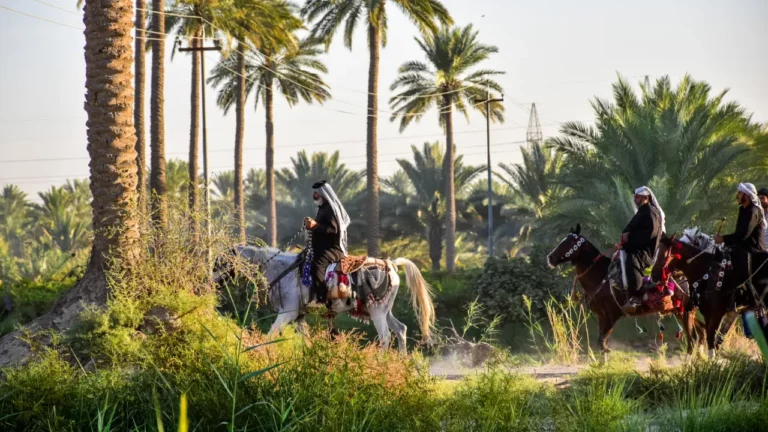
- Witness a hunt: At dawn, a handler releases a hooded falcon from horseback or ATV (modern adaptation).
- Care rituals: Falcons sleep tethered near the tent; fed raw meat with ḥalba (fenugreek) for stamina.
- Ethical note: No wild falcons are captured — all are bred in captivity, per Iraqi law.
Conservation Link: The Shammar’s Al-Himā Falconry Cooperative works with BirdLife International to monitor migratory routes.
Weaving Your Own Mikrama (Headband)
Women weave ‘iqāl (camel-hair headbands) and mikrama (embroidered forehead bands) on portable ground looms.
- Symbolism:
- Red thread: Bloodline, fertility
- Black base: Protection from al-‘ayn (evil eye)
- Zigzag patterns: Lightning — divine blessing
- Process: 3 days to weave 30 cm. You’ll likely finish one motif — a token to take home.
Poetry Duel (Naqā’iḍ) by Firelight
Bedouin shi‘r (poetry) is live, improvised, and fiercely competitive. Themes: bravery, loss, camels, love of land.
A typical exchange:
Elder A:
“My tent stands firm though winds howl from the west —
Like my honour, unshaken, putting doubt to the test.”You (with help):
“Your words are dates — sweet, sustaining, and true —
May my heart store their wisdom as my journey renews.”
Don’t fear mistakes — laughter is part of the tradition. A sincere attempt earns more respect than perfection.
Part V: Tribes of Al-Jazirah — Identity and Nuance
While outsiders say “Bedouin,” locals identify by ‘ashīra (clan) and qabīla (tribe). Key groups:
| Tribe | Region | Specialisation | Notable Trait |
|---|---|---|---|
| Shammar | Sinjar, Tel Afar, Al-Qa’im | Camel breeding, long-distance trade | Largest Iraqi tribe; historic rivals of Anizah |
| Dulaym | Ramadi, Haditha, Rawa | Sheep/goat pastoralism, well-digging | Masters of bi’r (well) engineering; deep Quranic scholarship |
| Jubur | Mosul Plains, Kirkuk fringe | Mixed farming (barley, lentils), horse breeding | Bilingual (Arabic/Kurdish); famed cavalry in Ottoman era |
Critical Context: Many tribes were displaced after 2003 and 2014 (ISIS). Returning families often camp near ancestral dirah but lack formal land titles — a quiet crisis.
Part VI: Challenges & Ethics — Travelling with Integrity
The Drought Reality
Since 2020, the Tigris-Euphrates flow has dropped 50% due to Turkish/Syrian dams and climate change. Pastures are shrinking; wells run dry.
- What you’ll see: Skeletons of starved livestock, abandoned camps, children with dust-induced asthma.
- How to help:
- Donate to Iraqi Pastoralist Support Fund (transparent, community-led)
- Avoid “poverty tourism” — focus on resilience, not victimhood
- Never give money directly to children (undermines parental authority)
Gender Dynamics — Navigating with Grace
- Women’s spaces are sacred. Men (including guests) do not enter the ḥarīm (women’s tent section) uninvited.
- Female travellers gain unique access — tea circles, weaving, birthing stories — but must uphold modesty.
- Photography rule: If a woman covers her face (burqu‘), never ask her to remove it — even indoors.
Avoiding the “Safari” Trap
This is not a zoo. Do not:
❌ Call it a “tribal experience”
❌ Ask to “dress like a Bedouin” for photos
❌ Bargain over gifts (hospitality is not transactional)
Do:
Use phrases like “Shukran li-karamikum” (“Thank you for your generosity”)
Accept second helpings — refusing implies the host failed
Send a handwritten note (in Arabic, if possible) after returning
Part VII: Practical Guide — Planning Your Week
When to Go
- Best: November–March (10–22°C days, crisp nights)
- Avoid: June–August (50°C+, sandstorms)
- Special time: Late February — lambing season, Haflat al-‘Aqīqa (naming ceremonies)
Logistics
- Start in Mosul or Tikrit: Fly to Erbil, drive 2.5 hrs to Mosul (secure corridor).
- Transport: 4×4 essential — no paved roads in dirah. Your guide provides this.
- Duration: Minimum 5 nights (1–2 days for trust-building; 3–4 for immersion).
Cost & Contribution
- Ethical homestay programs: $80–$120/day (includes transport, guide, food, family contribution)
- What’s included:
- All meals (vegetarian options available)
- Cultural activities (weaving, poetry, herding)
- 70% goes directly to host family
- Not included: Flights, tips (optional: $20–30 for family, $30–50 for guide)
Packing Essentials
- Clothing: 3x long cotton sets (wash by hand), wide-brimmed hat, shemagh (scarf — useful for dust/sun)
- Gear: Headlamp, quick-dry towel, biodegradable soap, journal
- Health: Water purifier tablets, rehydration salts, antiseptic cream (minor cuts common)
Connectivity
- No signal in most camps — embrace the digital detox.
- Emergency: Guides carry satellite phones. Nearest clinic: 30–60 mins by 4×4.
Voices from the Steppe — In Their Words
Sheikh Faisal al-Dulaymi, 72, near Haditha:
“They call us ‘backward’ because we move with the rain. But who is wiser — the man who drains a river dry in one year, or the one who waits for clouds?”
Umm Layla, 45, weaver and mother of six:
“When my daughters ask why we don’t live in a house with AC, I show them the stars. ‘This roof belongs to God,’ I say. ‘No landlord can raise the rent.’”
Karim, 19, university student (seasonal herder):
“I study engineering in Mosul. But every spring, I return. My phone has GPS — but my grandfather’s knowledge of where water hides under black rock? That’s the real technology.”
Conclusion: Carrying the Desert Within
Leaving the dirah, you’ll feel it — a strange lightness, a deeper breath. The desert doesn’t cling to you like sand (though it will, in your shoes, your hair, your camera bag). It settles inside: in your pace, your patience, your sense of enough.
The Bedouin of Al-Jazirah are not relics. They are custodians — of language, land, and a covenant older than nations: If you come in peace, you shall leave with honour.
To live among them, even briefly, is to remember that humanity’s oldest technology is not the wheel or the plough — it’s trust.
And in a fractured world, that may be the rarest resource of all.
Further Resources
- Books: The Bedouins of Iraq by Hossein A. Haddad; Desert Patriarchy by Lila Abu-Lughod
- Documentaries: The Last Nomads of Iraq (Al Jazeera, 2022); Water Keepers (National Geographic, 2024)
- NGOs to Support:
- Nature Iraq (natureiraq.org) — supports pastoralist-led conservation
- Iraq Heritage Rescue — documents oral histories
- Al-Jazirah Women’s Weaving Cooperative — sells authentic crafts online
SEO Optimisation Notes
- Primary Keywords: Bedouin Iraq, Al-Jazirah nomads, Iraqi desert homestay, Shammar tribe, living with Bedouin
- Secondary Keywords: Iraqi cultural tourism, ethical travel Iraq, Bedouin hospitality, pastoralist Iraq, desert immersion
- Meta Description: Experience authentic Bedouin life in Iraq’s Al-Jazirah region: a respectful, immersive week with nomadic tribes, including herding, poetry, weaving, and timeless hospitality.
- Image Alt Text Suggestions: “Bedouin woman weaving goat-hair tent in Al-Jazirah”, “Sunrise over Shammar encampment near Sinjar”, “Children herding goats in Iraqi steppe”
If you’re ready to explore Iraq, get in touch with us today. We offer complete travel packages, including flights, accommodation, and guided tours tailored to your needs. Simply fill out the form below or contact us on WhatsApp at +441992276061 for quick assistance. Let us make your journey to Iraq smooth and unforgettable!