The Islamic Golden Age in Baghdad – A Traveller’s Guide to Key Sites
Imagine wandering through wide, tree-lined avenues where poets recited verses under candlelit domes, astronomers charted the stars with astonishing precision, and scholars from Persia, India, Greece, and beyond debated philosophy in elegant libraries. This was not a mythical utopia — it was Baghdad at the height of the Islamic Golden Age (8th–13th centuries CE), a dazzling epoch of intellectual, scientific, and cultural flourishing that reshaped world history.
Founded in 762 CE by the Abbasid Caliph al-Mansur on the west bank of the Tigris River, Baghdad rapidly rose to become the intellectual capital of the known world. At its core stood the legendary Bayt al-Hikma (House of Wisdom), a grand academy and translation hub that attracted minds like Al-Khwarizmi (father of algebra), Al-Razi (pioneer of clinical medicine), and Ibn Sina (Avicenna), whose Canon of Medicine remained a European standard for over 600 years.
While centuries of conflict and the devastating Mongol sack of 1258 CE have erased much of medieval Baghdad’s physical fabric, traces of its golden legacy endure — in reconstructed monuments, archaeological sites, museum treasures, and, most powerfully, in the living traditions of scholarship, art, and urban life.
This guide is crafted for the culturally curious modern traveller: not an archaeologist or academic alone, but a seeker of stories, symbols, and soul. We’ll explore key historical sites, suggest immersive experiences, offer practical travel tips, and — crucially — help you see beyond the ruins to reconstruct, in your mind’s eye, the luminous city of the Abbasid era.
Let’s begin our journey through time — and space — to the Round City, the Tigris banks, and the echo chambers of human genius.
Why Baghdad? Why the Golden Age?
Before diving into sites, it’s essential to understand why Baghdad mattered — and still does.
The Islamic Golden Age wasn’t just about “preserving Greek knowledge.” It was a dynamic, centuries-long project of critical synthesis and original innovation. Scholars didn’t merely translate Aristotle — they critiqued, expanded, and sometimes refuted him. They integrated Indian numerals (including zero), Persian administrative science, Chinese papermaking, and Mesopotamian astronomy into a new, cosmopolitan intellectual framework — all unified by the Arabic language and a spirit of ijtihad (independent reasoning).
Baghdad was the epicentre because:
- Strategic Location: At the crossroads of trade routes (Silk Road, Persian Gulf, Mediterranean), it linked East and West.
- Abbasid Vision: Caliphs like Harun al-Rashid (r. 786–809) and especially al-Ma’mun (r. 813–833) actively patronised learning as both state policy and religious duty (“Seek knowledge, even in China”).
- Institutional Innovation: The House of Wisdom wasn’t a library — it was a research institute, observatory, translation bureau, and university rolled into one.
- Cultural Openness: Christians, Jews, Zoroastrians, Sabians, and Muslims collaborated freely. Translation teams included Nestorian Christians like Hunayn ibn Ishaq, who rendered Galen into flawless Arabic.
Today, visiting Baghdad offers more than history — it offers perspective. In a world often divided along civilisational lines, the Golden Age reminds us of what’s possible when curiosity triumphs over dogma.
Part I: The Heart of the Round City — Where It All Began
The Founding: Al-Mansur’s Vision of Cosmic Order
In 762 CE, Caliph Abu Ja‘far al-Mansur chose a site on the west bank of the Tigris — flat, defensible, and blessed with fresh water and date palms. His ambition? To build not just a capital, but a cosmogram: a circular city reflecting divine harmony.
The Round City (Madinat al-Salam — “City of Peace”) was a marvel of urban planning:
- Diameter: ~2 km (1.2 miles)
- Walls: Triple concentric rings — outer mud-brick, middle baked brick, inner stone — each 30m high.
- Four Gates: Named after key provinces — Kufa, Basra, Khurasan, and Syria — symbolising unity.
- Central Complex: Caliphal palace, Great Mosque, and administrative offices — all aligned astronomically.
Though no visible ruins remain (the site lies buried beneath modern al-Khulafa district), standing near the Qasr al-Khuld Park (on the approximate western edge of the Round City) lets you orient yourself spatially. Look east toward the Tigris: imagine the golden dome of the palace glinting in the sun, minarets rising, scholars hurrying through guarded gates.
📍 Traveller’s Tip: Hire a local history-savvy guide (e.g., through the Iraq Tourism Board or Al-Rasheed Cultural Tours). Ask them to sketch the Round City layout on paper — the mental reconstruction is half the magic.
The Great Mosque of al-Mansur
At the city’s geometric heart stood the first congregational mosque, large enough for 20,000 worshippers. While later replaced by larger mosques (like the 9th-century al-Mutawakkil Mosque), its spiritual and symbolic role was immense — Friday sermons here reinforced the Caliph’s role as both political and religious leader.
Though gone, its legacy lives on in:
- The orientation of later Abbasid mosques (qibla slightly east of Mecca — a fascinating historical anomaly).
- The tradition of khutba (sermon) as state communication.
Did You Know? The Friday prayer (Jumu’ah) in Baghdad was broadcast across the empire via mounted couriers — an early “news network.”
Part II: The House of Wisdom & Scholarly Landmarks
Bayt al-Hikma (House of Wisdom) — The Brain of the World
Let’s be clear: no physical structure of the original Bayt al-Hikma survives. But its location is strongly associated with the western bank of the Tigris, near the Round City’s western gate — today roughly the area around Al-Mutanabbi Street (more on that soon).
What was it?
- Founded c. 830 CE under Caliph al-Ma’mun (though building on earlier translation efforts).
- Functioned as:
✅ Translation centre (Greek → Syriac → Arabic)
✅ Observatory (with instruments imported from India and Persia)
✅ Research lab (al-Khwarizmi calculated Earth’s circumference here)
✅ Library (reportedly held 400,000+ volumes — more than Alexandria at its peak)
Key figures associated:
- Al-Khwarizmi (c. 780–850): Wrote Kitab al-Jabr wa-l-Muqabala — introducing algebra (from al-jabr) and algorithms (al-Khwarizmi → algorithm).
- The Banu Musa brothers: Engineers who described automatic controls and invented crankshafts.
- Hunayn ibn Ishaq: Translated 116 Galen texts — often improving them with clinical notes.
🌍 Legacy Moment: Without Bayt al-Hikma, Europe’s Renaissance would’ve lacked its foundational texts. Thomas Aquinas debated Averroes (Ibn Rushd), who himself built on translations done in Baghdad.
🔹 Where to Feel the House of Wisdom Today
- Al-Mutanabbi Street (Shāri‘ al-Mutanabbi)
The Soul of Baghdad’s Literary LifeNamed after the 10th-century poet, this pedestrianised book street — lined with cafés, antique bookshops, and calligraphy stalls — is the spiritual successor to the Bayt al-Hikma. Every Friday, intellectuals gather at Shabandar Café (est. 1917), its walls plastered with photos of poets, politicians, and philosophers.- Don’t miss: The Al-Mustansiriya Madrasa entrance just off the street (see below).
- Experience: Buy a facsimile of an Abbasid-era manuscript (many shops sell reproductions of Maqamat al-Hariri with exquisite miniatures).
- Pause by the Tigris: At the end of the street, stand on the bridge. Visualise scholars crossing by boat to observatories on the east bank.
- Al-Mustansiriya Madrasa (1227 CE)
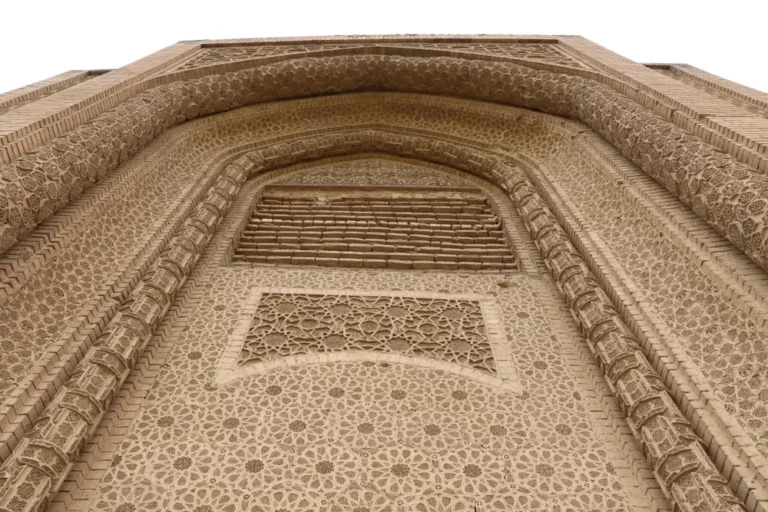
The Last Great Light Before the DarknessThough built after the Golden Age’s peak, this Sunni seminary — founded by Caliph al-Mustansir — embodies its educational ideals. It’s one of the oldest universities in the world still standing.- Architecture: Grand iwan (vaulted hall), intricate muqarnas (stalactite) ceilings, restored lecture halls.
- Innovations: First institution to issue ijazas (diplomas) across four Sunni madhhabs (schools of law).
- Tragedy & Resilience: Severely damaged in 2007 bombing; meticulously restored by Iraqi engineers using original Abbasid brick patterns.
Part III: Palaces, Gardens & Urban Life
Qasr al-Khuld (Palace of Eternity)
Built by Caliph al-Mansur and expanded by Harun al-Rashid, this riverside palace was famed for its:
- Hanging gardens (inspired by Babylon)
- Mechanical fountains (designed by Banu Musa)
- Library of rare manuscripts
- Reception hall where ambassadors from Charlemagne were received (gifts exchanged: an elephant named Abul-Abbas for a water clock!)
Today: Only foundations remain, near modern Qasr al-Khuld Park. But the park itself — with its palm groves and Tigris views — evokes the palace’s serene setting. Look for the commemorative plaque (in Arabic and English) detailing its history.
The Rusafa District (East Bank)
While the Round City was administrative, Rusafa — across the Tigris — became the cultural and commercial hub:
- Home to poets like Abu Nuwas
- Site of the first paper mill in the Islamic world (post-751 CE Battle of Talas, where Chinese papermakers were captured)
- Bustling suqs (markets) for spices, silks, and scientific instruments
Walk along Abu Nuwas Street (named after the irreverent poet) by the river. Though modernised, it retains the promenade tradition — a place for evening strolls, tea, and conversation, just as in Abbasid times.
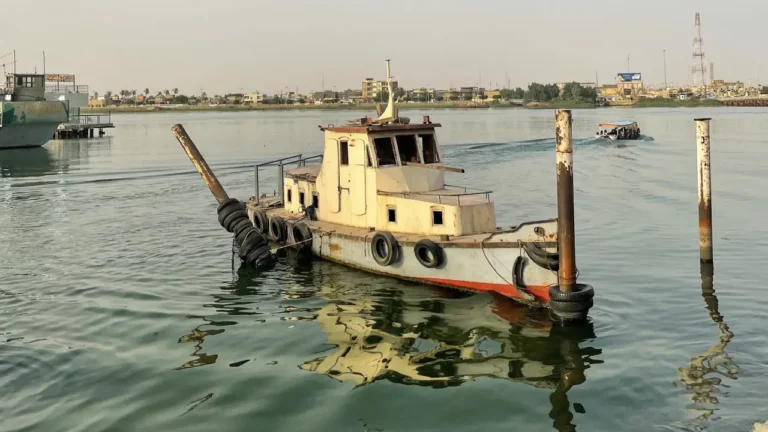
Local Ritual: Order chai baghdadi (strong black tea with mint and cardamom) at a riverside café. Watch fishermen cast nets — a practice unchanged for 1,200 years.
Part IV: Science in the City — Observatories, Hospitals & Engineering
The First Hospitals (Bimaristans)
Baghdad pioneered the modern hospital model:
- First bimaristan: Founded by Harun al-Rashid (c. 805 CE), directed by Jabril ibn Bakhtishu (a Nestorian physician).
- Features: Separate wards (fever, surgery, mental health), pharmacies, lecture halls, 24/7 care — free for all.
- Medical licensing required exams and case logs.
While no Abbasid hospital stands, the Iraq Museum of Medicine (in the Ministry of Health complex) displays:
- Replicas of surgical tools (cataract needles, bone saws)
- Pages from Ibn Sina’s Canon
- Models of hospital layouts
🩺 Fact: Al-Razi’s Kitab al-Hawi (Comprehensive Book) described smallpox vs. measles — the first clinical distinction.
Water Engineering: Canals, Aqueducts & Norias
Baghdad’s survival depended on water management:
- Nahr Isa & Nahr Sarsar: Grand canals bringing Euphrates water 120 km to the city.
- Norias (Waterwheels): Giant wooden wheels lifted Tigris water into aqueducts — some powered by oxen, others by river current.
Visit the Saraiyat area northeast of central Baghdad: local farmers still use small norias for irrigation — a living technology inherited from Abbasid engineers.
Part V: Beyond the City — Day Trips to Golden Age Echoes
Samarra (125 km north)
When political tensions rose in Baghdad, Caliph al-Mu‘tasim built Samarra (836–892 CE) as a new capital. Though short-lived, it boasts:
- The Great Mosque & Malwiya Minaret: Spiral 52m tower — a unique architectural icon (climb for panoramic views).
- Qasr al-‘Ashiq: Riverside palace with stucco reliefs of dancers and musicians.
- Abbasid-era pottery workshops (still active in nearby villages).
Logistics: 1.5-hour drive. Hire a driver + guide. Best visited Oct–April.
Ctesiphon (32 km southeast)
Pre-Islamic, but vital context: the Taq Kasra — a colossal Sassanian arch (37m high) — awed early Muslim conquerors. Caliph Umar reportedly prayed here, saying, “People who built this could never be defeated — unless they lost divine favour.” The arch influenced Abbasid vaulting techniques.
Part VI: Museums — Where the Past Is Preserved
The Iraq Museum (National Museum of Iraq)
Despite looting in 2003, it remains one of the world’s great archaeological treasures. Golden Age highlights:
- Abbasid Pottery: Lustreware bowls with Kufic inscriptions (“Blessings to the owner”).
- Astrolabes: Brass instruments signed by 9th-century Baghdad makers.
- Manuscripts: Fragments of early Quranic codices and scientific texts.
- Coins: Gold dinars bearing Quranic verses and caliphal names.
Pro Tip: Book the “Science & Scholarship” guided tour (2 hrs) — it focuses on Golden Age artefacts often missed by general tours.
The Museum of Arab-Islamic Art (at Al-Mustansiriya)
Smaller but deeply focused:
- Replicas of House of Wisdom instruments
- Calligraphy evolution from Kufic to Naskh
- Interactive touchscreen showing translation workflows
Part VII: Experiencing the Golden Age — Beyond Sightseeing
Taste the Abbasid Table
Food was science and art. Try these historically inspired dishes:
- Tharīd: Bread soaked in meat broth — Prophet Muhammad’s favourite; mentioned in Abbasid cookbooks.
- Muhallabiyya: Rosewater-infused milk pudding — named after court cook al-Muhallab.
- Jawārish: Digestive pastilles of herbs and sugar (precursor to modern lozenges).
Where to Eat: Dar al-Atraqchi Café (near Al-Mutanabbi) — 19th-century Ottoman house serving heritage recipes with storytelling menus.
Listen: Music of the Maqam
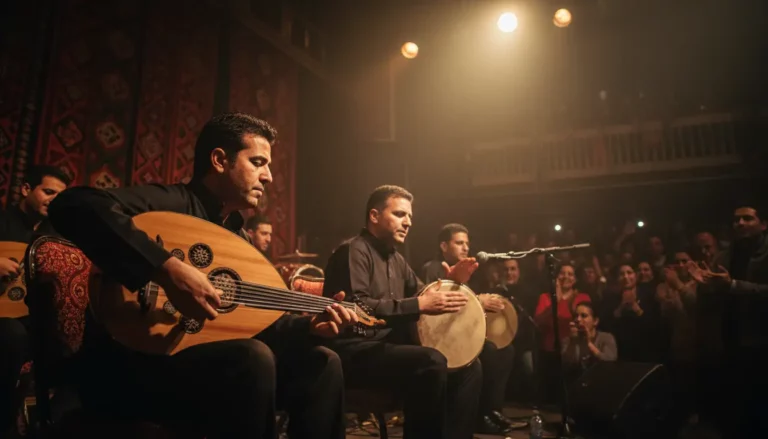
The Iraqi Maqam — a UNESCO Intangible Heritage — descends directly from Abbasid court music. Attend a performance at:
- Al-Bayt al-‘Iraqi (cultural centre in Karrada)
- Friday evening sessions at Shabandar Café (informal, magical)
Watch: Calligraphy & Geometry
- Workshop: Join a 2-hour Kufic script class at the Iraqi Calligraphers Society (book ahead).
- Art: Seek out contemporary Iraqi artists like Wijdan Ali, who reinterprets Islamic geometry in modern media.
Practical Travel Guide: Visiting Baghdad Responsibly
When to Go
- Best: October–April (mild, 15–25°C). Avoid summer (50°C+).
- Festivals: Baghdad International Festival for Arts (Nov), Al-Mutanabbi Street Book Fair (March).
Where to Stay
- Mid-range: Al-Mansour Hotel (Tigris views, near Al-Mustansiriya).
- Boutique: Dar al-Atraqchi Guesthouse (historic home, cultural immersion).
- Luxury: Babylon Rotana (secure, pool, good transport links).
Getting Around
- Taxis: Use Careem app (like Uber) — safer, fixed pricing.
- Walking: Al-Mutanabbi Street, Abu Nuwas waterfront — best with a guide.
- Guides: Essential. Recommended: Dr. Layla Hassan (PhD, Islamic History, fluent English) — contact via Iraq Tourism Development Board.
Connectivity & Safety
- SIM cards: Available at airport (Zain, Asiacell).
- Security: Check your government’s travel advice. Major sites are in Green Zone-adjacent areas with military/police presence.
- Respect: Dress modestly (shoulders/knees covered). Ask before photographing people.
Responsible Tourism Tips
- Support local: Buy books from Al-Mutanabbi vendors, not imported souvenirs.
- Tip guides fairly: $20–30/day reflects expertise and economic reality.
- Avoid antiquities trade: Never buy unlicensed “artefacts” — it fuels looting.
The Legacy Lives: Baghdad’s Modern Renaissance
After decades of hardship, Baghdad is quietly reviving its intellectual spirit:
- The House of Wisdom Initiative (2021): A new national science & innovation hub named in homage.
- University of Baghdad: Rebuilding its astronomy and history departments with international partnerships.
- Youth movements: #BaghdadReads, digital archives of medieval manuscripts, hip-hop groups sampling maqam.
A visit today isn’t nostalgia — it’s participation. When you sip tea on Al-Mutanabbi Street, debate poetry at Shabandar, or trace the curve of a 9th-century astrolabe, you become part of an unbroken chain: from al-Khwarizmi to you.
Conclusion: Why This Journey Matters
The Islamic Golden Age in Baghdad teaches us that civilisations don’t rise in isolation — they bloom at intersections. Of faith and reason. Of tradition and innovation. Of local roots and global reach.
To walk its imagined streets is to reclaim a hopeful narrative: that human curiosity, when nurtured, can light the world — even after the darkest centuries.
So come. Not just to see ruins, but to witness resilience. Not just to learn history, but to imagine better futures.
Baghdad is waiting — not as a relic, but as a revelation.
Further Reading & Resources
- The House of Wisdom by Jim Al-Khalili
- Baghdad: City of Peace, City of Blood by Justin Marozzi
- UNESCO’s Reviving the Spirit of Mosul & Baghdad project
- Digital archive: The Treasury of the Sciences (al-Furqan Foundation)
SEO Optimisation Notes
- Primary Keywords: Islamic Golden Age Baghdad, House of Wisdom, Al-Mutanabbi Street, Abbasid Baghdad travel, Bayt al-Hikma, historical sites in Iraq
- Secondary Keywords: Baghdad travel guide, Islamic science history, medieval Baghdad, Iraq cultural tourism
- Meta Description: Explore Baghdad’s Islamic Golden Age with this immersive traveller’s guide: key sites, museums, food, and practical tips for experiencing the legacy of the House of Wisdom.
- Internal Links (if publishing on website): Link to Iraq tourism portal, museum hours, guided tour bookings.
- Image Alt Text Suggestions: “Al-Mutanabbi Street book market in Baghdad”, “Restored iwan at Al-Mustansiriya Madrasa”, “Taq Kasra arch at Ctesiphon near Baghdad”.
If you’re ready to explore Iraq, get in touch with us today. We offer complete travel packages, including flights, accommodation, and guided tours tailored to your needs. Simply fill out the form below or contact us on WhatsApp at +441992276061 for quick assistance. Let us make your journey to Iraq smooth and unforgettable!