Wild Camping in Iraq – A Guide to Responsible Off-Grid Travel
Not Just Survival — Sacred Reconnection
To wild camp in Iraq is not to “rough it.”
It is to realign.
Beneath the unpolluted skies of the Western Desert, beside the reed-fringed lagoons of the Marshlands, or atop the pine-scented ridges of the Zagros Mountains, Iraq offers some of the Middle East’s most profound — and least crowded — off-grid experiences.
Yet this isn’t Patagonia or the Rockies. Wild camping here is layered with history, responsibility, and deep cultural meaning. A campfire isn’t just warmth — it’s diyafa (hospitality) extended to the land itself. A tent pitched near ancient ruins isn’t just convenience — it’s a silent dialogue with millennia.
This guide is for the mindful adventurer: the one who seeks solitude without intrusion, adventure without arrogance, and connection without consumption.
Because in Iraq, the wild doesn’t just allow you to camp.
It invites you —
if you come with respect.
🔗 Before you go: Ground your trip with our Complete Guide to Visiting Iraq, covering visas, safety, and ethical travel principles.
Part I: Why Iraq? The Untamed Allure
Iraq’s wilderness is vast, varied, and vibrantly alive:
- The Western Desert (Al-Hamad): 100,000 km² of rolling serir (gravel plains), fossil rivers, and Neolithic rock art — one of Earth’s darkest sky reserves.
- The Mesopotamian Marshes: A UNESCO World Heritage site — labyrinthine waterways, mudhif reed houses, and rare birds like the sacred ibis.
- The Zagros Foothills: Oak woodlands, glacial lakes, and terraced villages — home to wolves, leopards (rare), and millennia of pastoral wisdom.
- The Tigris River Corridor: Remote sandbanks and palm groves between Baghdad and Samarra — accessible yet untouched.
Local Insight (Sheikh Thamir, Maʻdān elder):
“The desert doesn’t fear silence. It fears forgetting. When you camp here, you become part of the memory — not the damage.”
🔗 Explore the ecosystems: Exploring Iraq’s National Parks and Natural Wonders
Part II: Where to Wild Camp — Safe, Legal & Respectful Zones
Critical Note: Much of Iraq is off-limits due to UXO (unexploded ordnance), military zones, or private land. Never camp without local guidance.
1. The Marshlands (Southern Iraq)
Near Chibaish, Al-Qurnah, or Huwair
- Landscape: Floating reed islands, open lagoons, water buffalo grazing
- Permits: Required via Basra Tourism Office or licensed Maʻdān guides
- Best Camp Spots:
- Garmat Ali Lagoon — sunrise over mirror-still water
- Eden Confluence — where Tigris + Euphrates meet (near Ezra’s Tomb)
- Cultural Protocol:
- Always ask Maʻdān families for permission — many offer mudhif stays
- Remove shoes before entering reed structures
- No drones — sacred to local communities
🔗 Deepen the experience: The Majestic Marshlands of Southern Iraq — A Hidden Gem
2. Zagros Mountain Valleys (Kurdistan)
Near Rawanduz, Halgurd, or Bekhal
- Landscape: Pine forests, glacial streams, terraced farms
- Permits: Via KRG Ministry of Tourism (free; 3-day processing)
- Best Camp Spots:
- Geliy Shirin Valley — turquoise pools, ideal for post-hike camping
- Bekhal Gorge — dramatic cliffs, star-filled nights
- Safety: Avoid high elevations Nov–Mar (snow); register route with local Asayish
🔗 Pair with adventure: Canyoning in Rawanduz — Iraq’s Most Adrenaline-Fuelled Activity
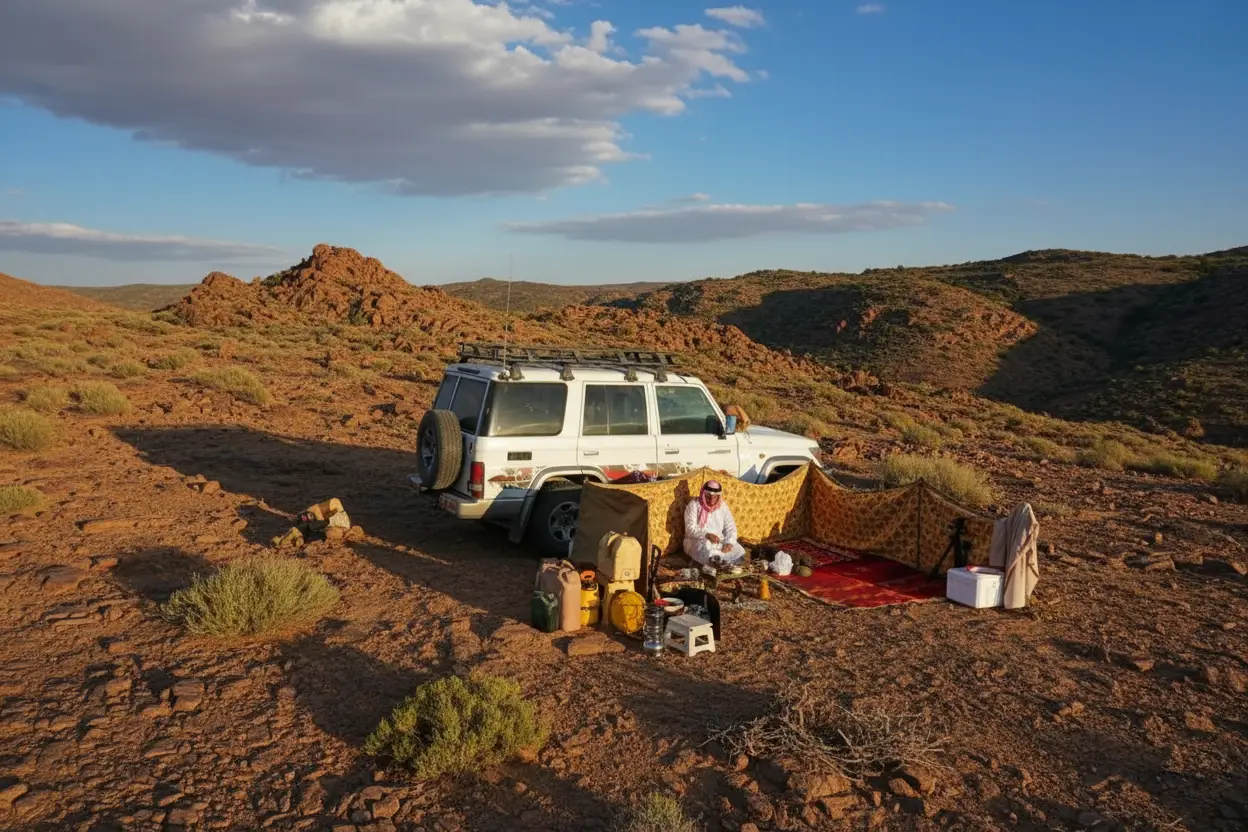
3. Western Desert Oases (Anbar Province)
Near Umm er-Rasas, Wadi al-Khoudar
- Landscape: Sandstone mesas, fossil beds, ancient caravan routes
- Permits: Mandatory via Anbar Governorate + military escort (arranged by tour operator)
- Best Camp Spots:
- Wadi al-Khoudar — sheltered canyon with freshwater springs
- Umm er-Rasas Plateau — near Byzantine ruins (UNESCO)
- Guides Required: Due to UXO risk; only use licensed operators (e.g., Desert Legacy Iraq)
Never camp near:
- Military checkpoints
- Archaeological sites (without permit)
- Active farmland or livestock enclosures
🔗 Historical context: 10 Historical Sites You Can’t Miss in Iraq
Part III: The 7 Principles of Responsible Wild Camping in Iraq
1. Go Local — Or Don’t Go At All
Always hire a licensed local guide — they know safe zones, water sources, cultural norms, and seasonal risks.
→ Support community tourism: How to Experience Iraq’s Art and Craft Scene
2. Leave More Than You Find
- Pack out all waste — including biodegradable food scraps (disrupts wildlife)
- Carry a small bag for existing litter — leave sites cleaner than you found them
- Never carve names or build cairns — they disturb archaeological layers
3. Water Is Sacred — Use It Wisely
- Use biodegradable soap (e.g., Dr. Bronner’s) — 100m+ from water sources
- Strain dishwater; scatter residue widely
- In marshes, use reed-filtered water only for cleaning (not drinking)
4. Fire With Permission — Or Skip It
- Open fires are banned in marshes and dry seasons (May–Oct)
- Use a portable stove (e.g., Jetboil)
- If fire is culturally shared (e.g., with Maʻdān hosts), use only deadfall wood — never cut live trees
5. Camp Light, Camp Right
- Tent colour: Earth tones (no bright blues/reds — disturbs wildlife)
- Distance: 200m+ from homes, trails, and waterways
- Duration: Max 2 nights in one spot — reduces impact
6. Wildlife Is Family — Observe, Don’t Interact
- Do not feed animals (even friendly water buffalo)
- Store food in bear-proof bags (prevents attracting jackals)
- If you spot a Persian leopard (rare), photograph silently — never chase
7. Ask Before You Document
- Photographing people, homes, or rituals requires explicit consent
- Never post GPS coordinates of fragile sites — protects from vandalism
🔗 Ethical foundation: How to Respect Local Customs and Traditions in Iraq
Part IV: Essential Gear — Lightweight, Low-Impact, Iraqi-Tested
| Category | Must-Haves | Why It Matters in Iraq |
|---|---|---|
| Shelter | 2-person ultralight tent (e.g., MSR Hubba), footprint | Sandstorms common — footprint protects base |
| Sleep System | 0°C sleeping bag, insulated pad (R-value ≥ 4) | Desert temps drop to 5°C at night, even in summer |
| Water | 3L hydration bladder + Sawyer filter + purification tabs | Tap water unsafe; marsh water needs double filtration |
| Cooking | Jetboil stove, titanium pot, spork | No fire needed; lightweight for long hikes |
| Safety | Satellite messenger (Garmin inReach), headlamp (300+ lumens), first-aid kit | No signal in remote zones; medical help hours away |
| Respect Kit | Small gift (dates, Arabic coffee), phrasebook, reusable bag | Builds trust with local communities |
🔗 Tech prep: Top 5 Travel Apps for Iraq (download offline maps!)
Part V: Seasonal Guidance — When (and When Not) to Go
| Season | Pros | Cons | Best For |
|---|---|---|---|
| Oct–Apr | Mild temps (10–25°C), clear skies, wildlife active | Shorter days, occasional rain in north | ★★★★☆ All regions |
| May–Jun | Long days, wildflowers in Zagros, marsh water high | Rising heat (35°C+), sharqi dust storms | ★★★☆☆ Marshes, mountains |
| Jul–Sep | Few tourists, star visibility peak | Extreme heat (50°C+), water scarce | ★☆☆☆☆ Avoid — dangerous |
| Nov–Feb | Crisp air, snow-dusted Zagros, migratory birds | Cold nights (-5°C), road closures in mountains | ★★★☆☆ Desert, marshes |
Pro Tip: October & March offer the “golden windows” — cool days, warm nights, minimal wind.
🔗 Detailed climate guide: Best Time to Visit Iraq — Weather and Seasonal Highlights
Part VI: Sample Itineraries — From Weekend to Week-Long
3-Day Marsh Immersion (Southern Iraq)
- Day 1: Drive from Basra → Chibaish; meet Maʻdān guide; canoe to campsite
- Day 2: Sunrise photography, help harvest reeds, night camp under stars
- Day 3: Visit Ezra’s Tomb; return via Shatt al-Arab boat ride
🔗 Add context: Dhow Sailing on the Shatt al-Arab
5-Day Zagros Trek & Camp (Kurdistan)
- Day 1–2: Hike Via Dinarica → camp at Geliy Shirin
- Day 3: Canyoning in Rawanduz → riverside camp
- Day 4–5: Summit Halgurd base camp → stargaze at 2,800m
🔗 Adventure combo: Kurdistan’s Via Dinarica + Canyoning in Rawanduz
7-Day Desert & History Loop (Anbar)
- Days 1–2: Umm er-Rasas ruins → wild camp on plateau
- Days 3–4: Wadi al-Khoudar canyon hike → spring-side camp
- Days 5–7: Return via Hit → explore ancient bitumen seeps
🔗 Historical pairing: Exploring the Ancient City of Babylon
🔗 Full planning: How to Plan a Safe and Enjoyable Trip to Iraq
Part VII: Voices from the Wild
Nasrin, 29, Maʻdān guide (Chibaish):
“When tourists camp with us, they don’t just see the marsh. They feel it — the water’s breath, the reed’s song. That’s when they become protectors, not just visitors.”
Captain Aram, ex-peshmerga, mountain guide (Rawanduz):
“I fought to defend this land. Now I guide to heal it. Every camper who leaves no trace is a soldier for peace.”
Dr. Layla Abbas, ecologist (University of Basra):
“The marshes survived Saddam’s drainage. They’ll survive climate change — if we camp like guests, not owners.”
Conclusion: The Truest Luxury Is Responsibility
Wild camping in Iraq isn’t about isolation.
It’s about integration —
with the land that holds ancient stories,
with the people who guard them,
with the quiet truth that we are all just passing through.
So when you pitch your tent under a sky dense with stars —
where the Milky Way mirrors the Tigris’ flow,
and the wind carries whispers older than empires —
remember:
You are not conquering the wild.
You are being welcomed by it.
And the greatest honour you can offer in return?
To leave it,
as the Iraqis say,
“akthar jamālan min mā wajadta” —
more beautiful than you found it.
Plan Your Responsible Adventure
- 🛂 Visa & Entry: How to Obtain a Tourist Visa for Iraq
- ✈️ From the UK: Complete Guide to Travelling from the UK
- 📅 When to Go: Best Time to Visit Iraq
- 🧭 Full Trip Planning: How to Plan a Safe & Enjoyable Trip
- 💷 Budgeting: Budget Travel in Iraq
- 🎒 Tours & Guides: Best Tour Packages for Visiting Iraq
🔗 Start your journey: Travel2Iraq — Your Ultimate Guide to an Amazing Adventure
“The earth does not belong to us. We belong to the earth — and every footprint is a promise.”
— Adapted from a Maʻdān saying, whispered on the marsh winds
If you’re ready to explore Iraq, get in touch with us today. We offer complete travel packages, including flights, accommodation, and guided tours tailored to your needs. Simply fill out the form below or contact us on WhatsApp at +441992276061 for quick assistance. Let us make your journey to Iraq smooth and unforgettable!